

Have you ever wondered how modern gadgets get so thin and foldable? Flexible PCB fabrication is a big reason why smartwatches, medical sensors, and even foldable phones are possible. Blind Buried Circuits is one company that helps people like you build flexible PCBs for high-density designs right here in the USA.
If your project needs a bendable, space-saving circuit board, flexible PCB fabrication offers new options. It’s about picking the right materials, using good design rules, and thinking ahead so your board survives real-life use, not just tests.
Let’s break it down: from material choices to manufacturing steps and common mistakes, here’s what you need to know to work with your rigid flex PCB manufacturer.
Materials & Substrate Selection
Base Materials for Flex and Rigid-Flex
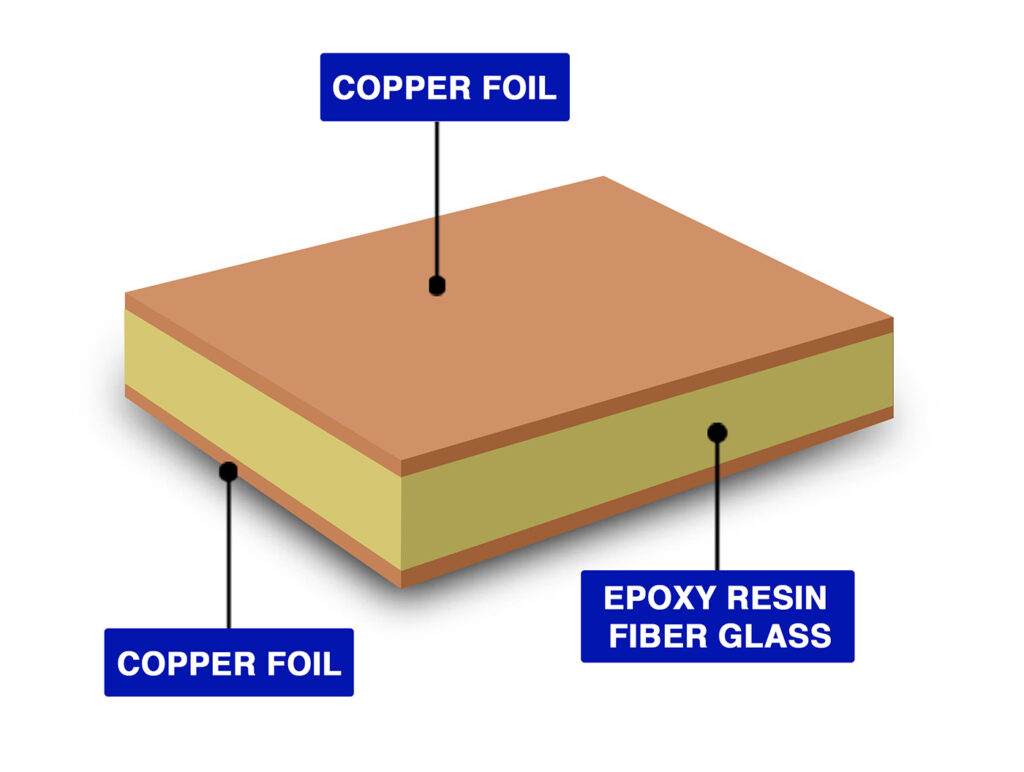
Polyimide film is the main star for flexible PCB fabrication. Why? Because it bends, handles heat, and keeps your signals running strong. Rigid-flex PCBs combine these with stiff layers (like FR4) where you need extra support, so connectors stay put while flexible sections route signals in tight spaces.

Adhesives, Prepregs & No-Flow Systems
Your layers need to stay together. Most flex PCBs use special adhesives or prepregs, think of “prepreg” as a sticky mat that melts into place. “No-flow” adhesives are used for clean lines and fewer messy surprises.

Copper Foil & Conductor Choices
Copper forms the electrical highways. Flexible PCB fabrication uses ultra-thin foils for bends. If your device needs to push high currents or resist physical stress, your rigid flex PCB manufacturer can suggest thicker copper.

Materials for High-Density Interconnect (HDI) Flex
High-density PCB fabrication needs advanced stuff, super-thin copper, unique coverlays, and microvias drilled by lasers. These deliver tons of connections in tight spots.
Material and Reliability Trade-offs
Flexible means bendable, but sometimes less demanding than rigid. Rigid materials last longer in fixed spots, while flex shines in moving or folding devices. Work with Blind Buried Circuits to balance what you need, strength, flexibility, long life, or all three.
Stack-Up, Layer Count & High-Density Structures

Flexible vs Rigid-Flex vs Multi-Flex Configurations
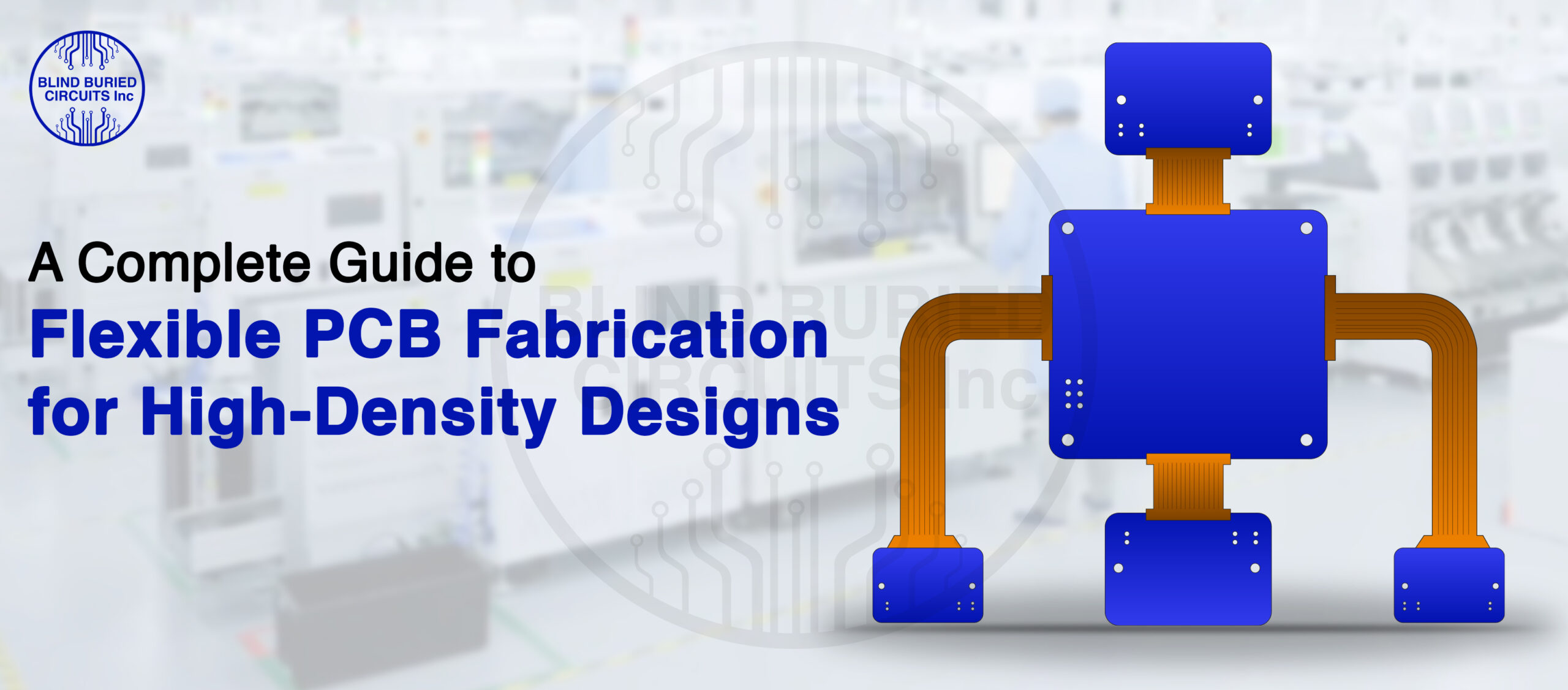
How many layers do you need? You can go single-layer, multi-flex, or rigid-flex. Rigid-flex PCBs keep essential spots stiff, like at connectors or chips, while flexible zones weave through small spaces.
Planning Stack-Up for High-Density Designs
Stack-up means how you arrange your layers. Want dense circuits? You need careful planning so the board stays bendy but still routes all signals. Talk early with your rigid flex PCB manufacturer if you want HDI features.
Layer Count Impact
Most flexible PCBs have around 2-10 layers. The more layers, the thicker, and harder, it gets to bend. High-density PCB application often use tricks like stacked or buried vias to pack lots of circuits without extra bulk.
HDI Features in Flex: Micro-vias, Via-in-Pad, Buried/Stacked Vias
Micro-vias let you go smaller. Via-in-pad hides connections under chips. Buried and stacked vias reduce the need for thick boards. Careful design stops cracks when the board bends.
Transitions: Flex to Rigid Interfaces
Where the flexible part meets the rigid part, add smooth transitions and reinforcements. This is a weak spot, so it needs strong adhesives and sometimes extra stiffeners.
Bend Radius, Dynamic vs Static Flexing
How much can you bend your board? “Bend radius” is the tightest curve your board survives without damage. “Dynamic” means the board moves a lot, “static” means it bends and stays. Use bigger bend radii for dynamic spots.
Design Considerations for High-Density Flex PCBs
Trace Width, Spacing & Routing
Keep traces wide in flex areas so they don’t crack. Don’t pack them too close together. And avoid sharp corners, curves are stronger.
Via Design & Placement
Put vias away from bending zones. Micro-vias are great for HDI, but don’t stack too many or crowd flex points.
Layer, Plane & Signal Integrity Planning
Power planes and ground must be close for stable signals. Avoid long parallels that pick up noise.
Mechanical Design: Shape, Contours, Reinforcements
Cut your PCB to fit your device. Add stiffeners where heavy chips sit and reinforcements for connectors. These keep everything secure during flexible PCB assembly.
Thermal & Mechanical Stress Management
Heat can break boards. Use copper shapes to help spread heat, and avoid putting heavy or fragile parts on flexible regions.
High-Density Component Packaging & Assembly Constraints
Dense layouts need precise placement. Before flexible PCB assembly, check tolerances and talk with your manufacturer about clearances.
DFM for Manufacturability & Yield
DFM means to make it easy to build right. Stick to manufacturer guidelines. Leave enough space, and keep designs clear.
Panelisation & Depanelization for Flex/High-Density
Boards are built in sheets, then punched or routed out. Plan break points gently, avoid tears.
Fabrication Processes & Manufacturing Challenges
Pre-Fabrication Tasks: CAM, Data Package, Manufacturer Consultation
Start right: clean design, checked Gerbers, and a chat with Blind Buried Circuits or your chosen rigid flex PCB manufacturer helps avoid last-minute trouble.
Flex Circuit Fabrication Steps
Copper rolls, photo patterning, drilling holes, plating, coverlay, silkscreen, testing, baking, and packaging, that’s the run. Fine lines and laser-microvias make HDI designs possible.
HDI Fabrication: Laser Vias, Filled Micro-vias, Fine Line Etch
Micro-vias are laser-drilled and filled with copper. You get crisp, tiny pathways for signals.
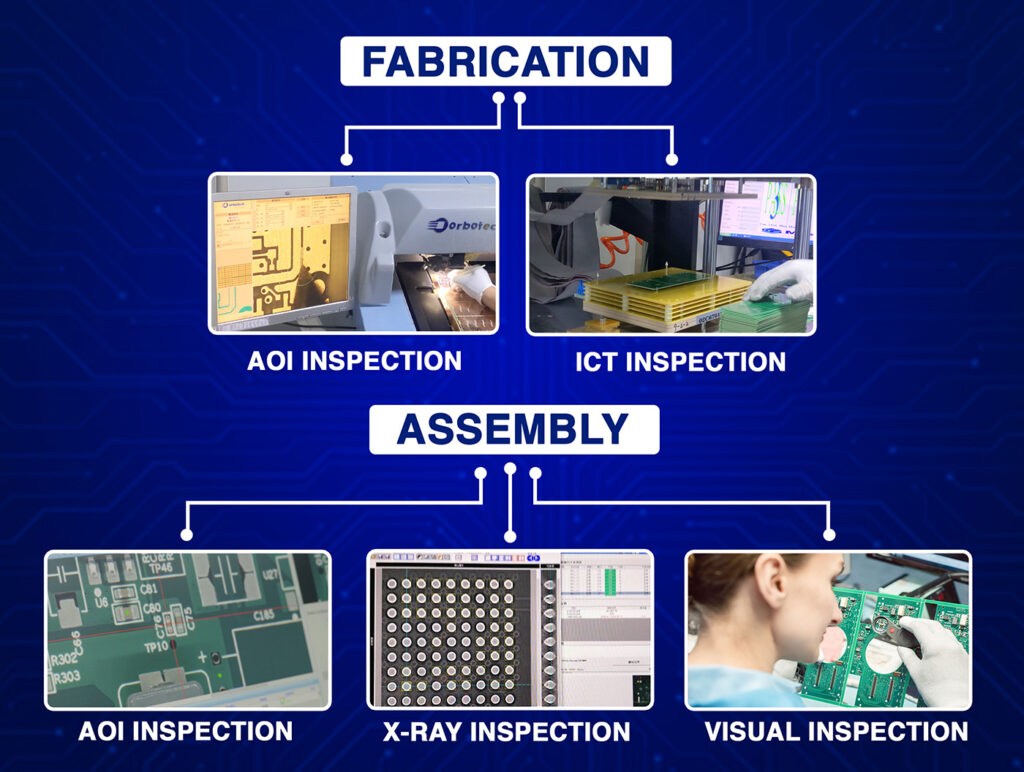
Quality & Reliability: Testing, Inspection, Flex Testing
Test every board. Bend it. Check for cracks. Pass it through flying probe and electrical tests.
Assembly Considerations for Flex Circuits
Gentle soldering, support for heavy parts, and baking to remove moisture. Careful, flexible PCB assembly avoids problems.
Handling, Storage & Logistics
Store boards flat. Pack well. Keep away from anything that bends or damages them.
Yield Risks & Mitigation Strategies
Watch for cracks, misalignments, and weird solder blobs. Blind Buried Circuits and other reliable manufacturers help spot mistakes early.
Reliability, Testing & Serviceability
Flexible PCBs work everywhere, from watches to hospital gear. Test with X-rays, flying probes, or functional checks. Make it easy to repair by planning access points and keeping documentation straight.
Cost, Time-to-Market & Manufacturability Trade-offs
Polyimide, HDI features, and laser drilling, these add cost. Dense boards need more TLC. Early design reviews and wise choices let you build faster, cheaper, and right the first time in the USA and Canada.
Industry Trends & Emerging Technologies
Look for 3D-shaped flexible PCBs, additive printing, and direct laser structuring. Blind Buried Circuits stays on top of trends to offer flexible PCB fabrication that matches industry needs.
Common Pitfalls & How to Avoid Them
- Bending boards too tightly and breaking traces
- Forgot reinforcements at flex-to-rigid spots
- Overlapping traces at bend points
- Confusing Gerbers or incomplete data packages, double-check design files
- Skipping early manufacturer consultation, invite Blind Buried Circuits early
Pre-Submission Checklist for High-Density Flex PCBs
- Confirm stack-up and material choices
- Check Gerber and layer files
- Mark the break points and the bend radius
- DFM review with the manufacturer
- Run quality checks and document everything
Conclusion
Flexible PCB fabrication lets you build exciting products that bend, fit, and survive in the real world. When you work with a reliable rigid flex PCB manufacturer like Blind Buried Circuits, your high-density PCB fabrication and flexible PCB assembly reach their full potential. Keep these principles at hand, and you’ll hit your design goals, whether you work in the USA, Canada, or beyond.
FAQs
Why does flexible PCB fabrication use polyimide for high-density PCB fabrication?
Polyimide flex substrates can bend and withstand heat, which is critical for both flexible PCB fabrication and high-density PCB fabrication in phones, wearables, and medical devices.
How do blind and buried vias help rigid flex PCB manufacturers tackle complex designs?
Blind and buried vias make it possible to pack more circuits and shrink board size, so rigid flex PCB manufacturers can build dense layouts and improve signal paths without bulky through-holes.
What’s the biggest risk in high-density PCB fabrication, and how do you avoid it?
The most significant risks are cracked traces from tight bends or missed manufacturer guidelines. Rely on regular DFM reviews and feedback from experienced rigid flex PCB manufacturers like Blind Buried Circuits to dodge these headaches.