

Almost every electrical gadget we use has printed circuit boards, or PCBs, inside it. But have you ever thought about how all those little pieces become attached to the boards in the first place? Wave soldering is one big answer. This guide breaks down wave soldering into simple, easy-to-follow steps for individuals who wish to learn how to assemble and construct PCBs or understand how a PCB board manufacturer integrates all those components.
Why is wave soldering important in the assembly of PCBs?
Establishing robust and reliable connections is crucial in the electronics industry. Printed circuit board assembly uses wave soldering to join through-hole components, which are pieces with wires that go through the board. This method is popular for constructing and assembling PCBs, as it saves time and ensures that each connection is strong, particularly when producing a large number of boards.
Let’s review the entire process step by step. If you’re familiar with these procedures, you’ll be able to appreciate the work that goes into making every electronic device, whether you’re a student, a hobbyist, or work with a PCB turnkey assembly supplier.

1. Preparing the PCB for Soldering
Every board must be ready before any soldering can begin. This is what happens:
- A special chemical called flux is injected into the new circuit board where the parts will connect.
- Flux cleans the metal and improves the adhesion of the solder.
- Some boards might receive a coating of solder paste in addition to flux, depending on how the PCB is manufactured and assembled.
Think of flux as the glue that holds things together in a craft endeavor. It doesn’t hold everything together in the end, but it makes sure the last connection is strong and clean.
2. Putting the Parts In: Next, it’s time to install the electronic parts:
People or robots place each element, such as resistors, chips, or connectors, through the holes in the printed circuit board assembly.
Pick-and-place devices perform this step quickly and accurately for projects with a large number of parts.
Ensure everything is in its correct place so that nothing falls off during the subsequent phases.
Putting this stage together is a lot like putting together a puzzle. Every piece has to fit just where it belongs.
3. Preheating: Getting the Board Warm
The board now goes through a brief preheating tunnel:
- The board heats warmers, which are like giant hair dryers, to a temperature between 80 °C and 100 °C.
- This heat helps the flux work and eliminates any remaining compounds.
- Preheating ensures that both the board and the parts are ready for the hot, liquid solder that will follow.
Think of preheating as warming up cookie dough before baking. It helps everything blend and stick better.
4. Wave Soldering: The Most Important Part of the Process
This is when things become interesting and a touch magical:
- The board is transported directly to a tank filled with hot solder, which resembles a small river of liquid metal.
- A pump in the tank creates a wave that causes the solder to bubble up.
- The leads (wires) from the pieces dip into the wave as the board moves over it.
- The solder connects every metal connection and joins the leads of the components to the board pads in just a few seconds.
Why use a wave? The moving wave cleans, coats, and links hundreds of locations at once. This is a lot faster than soldering each one by hand.
5. Cooling: Making the Solder Joints Strong
The board needs to cool down after the heated swim:
- It enters a cooling zone, which is typically air that has been cooled and has the correct balance of gases, such as nitrogen and oxygen-free air.
- As the board cools down, the solder solidifies and holds everything in place.
- It’s essential to cool down quickly yet in a controlled way. If you go too rapidly, the solder could break; if you go too slowly, the process becomes stuck.
Think about how to make ice cubes. If you let them freeze at just the proper speed, they’ll be perfect, with no cracks or clouds.
6. Quality Control and Inspection: Checking the Work
Even after all those processes, not every board is flawless the first time:
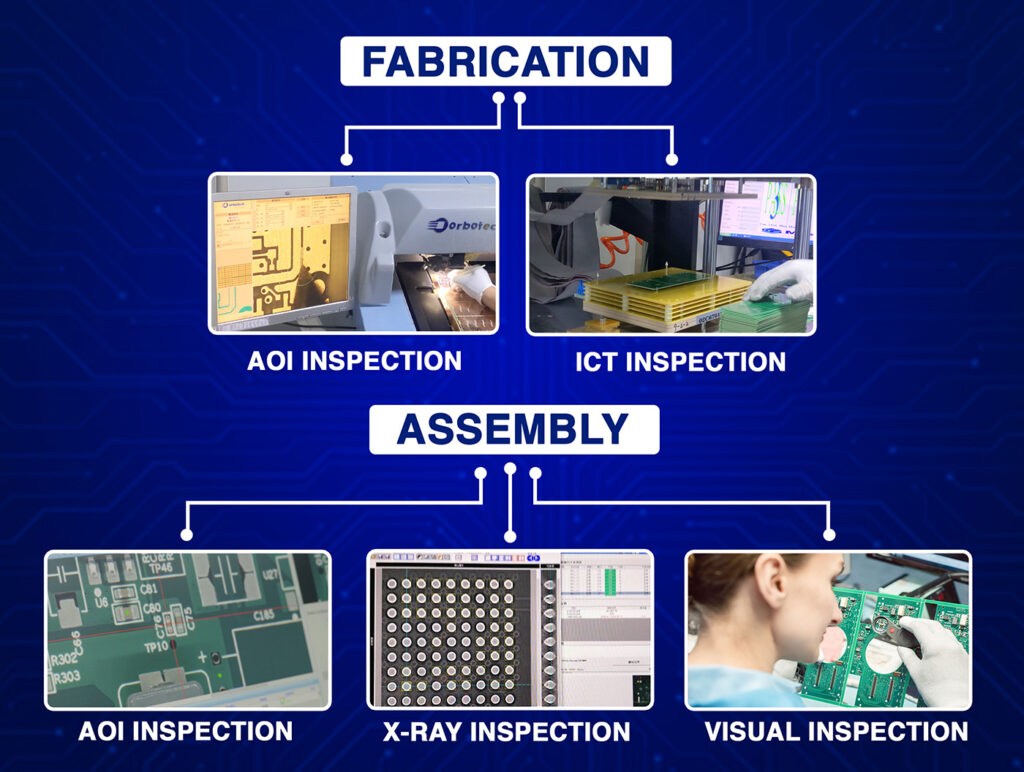
- We inspect each board, sometimes with our own eyes and sometimes with specialized cameras that can detect even the most minor flaws.
- Bad connections are marked for repairs.
This process is crucial for manufacturing PCBs because even a single poor joint can compromise an entire batch of products.
7. Final Cleaning: Getting Rid of Residue
After soldering, there may be flux or tiny particles of solder left over all over the place:
- To remove sticky or hazardous remnants, boards can be washed with a specific water or alcohol solution.
- Before moving on, the boards are dried and rechecked.
This cleaning ensures that every circuit board assembly is safe and ready for use in devices.
Things to Keep in Mind About Wave Soldering
Wave soldering isn’t new, but it remains one of the quickest and most reliable methods for building strong PCB connections, particularly when there are numerous components. Want to learn some professional tips for getting greater results?
- Select high-quality materials: Good boards and solder make a significant impact.
- Be cautious with the temperatures, as excessive heat can damage fragile parts.
- Add masking: Before the wave, a mask is put over areas that shouldn’t have solder.
- Recheck the location: Parts that are loose or not properly aligned can cause shorts or weak connections.
Why Does a Good Solder Joint Matter in Real Life?
Think about putting together a model airplane. The plane can’t fly if one of its wings isn’t fastened down tightly. A single poor solder joint can cause an entire circuit board to stop functioning. That’s why makers of PCB boards pay close attention to every stage in this procedure.
What Role Does Wave Soldering Play in Today’s PCB Turnkey Assembly?
Wave soldering is used by entire product teams, ranging from those that manufacture phones to those that produce vehicles to those that manufacture home products. Blind Buried Circuits and other quick-turn providers use wave soldering as part of what they do to:
- Quickly make prototypes for innovators.
- Give manufacturers big batches.
- Ensure that every connection meets high industry standards.
- Wave soldering machines have improved in their ability to produce reliable connections as automation has advanced.
Helpful Tips for Newbies and Hobbyists
If you’re new to assembling circuit boards, start with a simple, leaded solder and practice on scrap boards.
- Always wear safety glasses, as the metal is hot.
- Check the instructions for your solder and board material; the times and temperatures are essential.
- Being clean is important! Always keep your tools and workspace clean and organized.
Conclusion
Wave soldering is often the unsung hero of the manufacturing process for making and assembling PCBs. It links concepts on the screen to real devices that work. It gives products the extended life and dependability that users demand when done correctly.
When you see a phone, a car dashboard, or even a smart toaster, consider how the wave soldering process operates in the background. Understanding these stages can help you appreciate the talent that goes into every part of printed circuit board assembly, whether you’re running a factory or simply interested in how things work. Wave soldering is easy to understand and very useful in real-life applications. A wave that really makes the future happen.