

Objective
PCB work is getting tougher. Parts are smaller, speeds are higher, and rules are tighter. This blog explains AI-driven PCB design in PCB layout tools, what problems it solves, and what you still need to verify before PCB manufacturing and assembly.
Key Takeaways
- AI-driven PCB design learns from past boards to suggest better placement, routing, and checks.
- PCB design using machine learning is best at identifying recurring risks such as noise, heat, and rule violations.
- PCB layout design tools still need human constraints and final review.
- Better DFM choices can reduce rework in manufacturing and assembly.

Table of Contents
- Why PCB design needs intelligence
- AI and machine learning basics
- Challenges AI is solving
- Where AI helps most
- Generative layout
- AI for DFM, manufacturing, and assembly
- Tool features, use cases, benefits, limits, future
- Conclusion and FAQs
1) Introduction: Why PCB Design Needs Intelligence
Modern boards are dense, layered, and sensitive to even the smallest layout choices. Mobile phone PCBs are built with about 6 to 10 layers, depending on the device.
Traditional design often repeats the same loop: place, route, check, fix, repeat. AI is being added to reduce the number of repeats you need.
If you follow Blind Buried Circuits, you know that stackups, vias, and routing style can decide if a board is stable or painful. This article explains what AI can and cannot do so that you can use it wisely.
Did you know facts
- HDI PCBs use finer lines, smaller vias, and higher pad density to fit more routing into less space.
- Standards like IPC-2226 cover HDI guidance.
- A DRC check is a key step before fabrication because it tests layout rules in an EDA tool.
2) Understanding AI and Machine Learning in PCB Design
What AI means in electronic design
AI is software that makes choices based on data and goals. Machine learning is a type of AI that learns from examples. In AI-driven PCB design, the tool learns patterns from old layouts and outcomes, then suggests actions in a new design.
Why PCB data works well
PCB projects generate structured data that a model can learn from, such as constraints, placement, routing, and test results.
How PCB design using machine learning learns
A model is trained using past layout data plus outcomes, such as DRC failures, EMI issues, or manufacturing defects. It learns what patterns often lead to problems and flags them earlier.
3) Traditional PCB Design Challenges AI Is Solving
Increasing design complexity
Boards are tighter due to high-pin-count parts, high-speed nets, and mixed-signal or RF zones. HDI enables higher wiring density per unit area than standard boards.
Slow manual processes
A lot of time goes into placement tradeoffs, routing iterations, and review.
Costly errors
Late issues can cause rework, like signal, EMI, or thermal problems.
4) Key Applications of AI in PCB Design
AI-driven component placement optimization
AI-driven PCB design can quickly score many placement options. It can help you:
- Keep noisy circuits away from sensitive nets
- Reduce long parallel runs that raise cross-talk
- Space hot parts to lower hotspots
- Respect keep-outs and mounting holes
Smart routing with PCB design using machine learning
PCB design using machine learning can suggest routing paths based on prior boards. Typical targets are fewer vias, shorter traces, and cleaner return paths. You still review and adjust, but you start closer to a clean route.
Smarter DRC and verification in PCB layout design tools
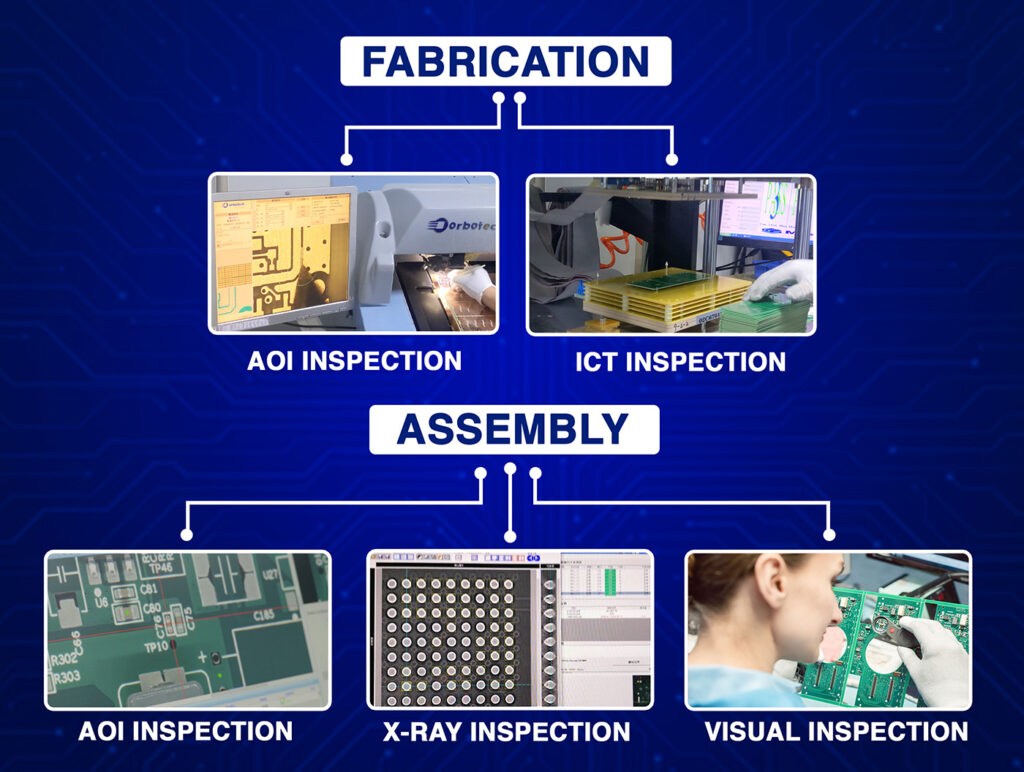
Rule-based DRC is essential before PCB manufacturing and assembly.
AI can add a “risk layer,” by flagging patterns that pass basic rules but often fail later, such as tight neck-downs, long coupled runs, or via patterns that create stubs.
Signal, power, EMI, and thermal help
AI-driven PCB design can also point out spots that warrant deeper simulation first, such as return-path breaks, noisy loops, power-drop zones, and hotspots.
5) Generative Design and Autonomous PCB Layouts
What generative PCB design means
Generative layout means the tool automatically generates multiple layout options after you set constraints.
Why it helps
It helps when you need a strong first draft quickly.
6) AI in manufacturing and assembly, and DFM
AI-assisted DFM and DFA checks
DFM asks if the board can be built well. DFA asks if it can be assembled reliably. AI can learn from manufacturing and assembly feedback and warn you about defect-prone patterns.
It can guide choices such as trace widths, via types, and stackups that meet factory limits.
Closed-loop learning
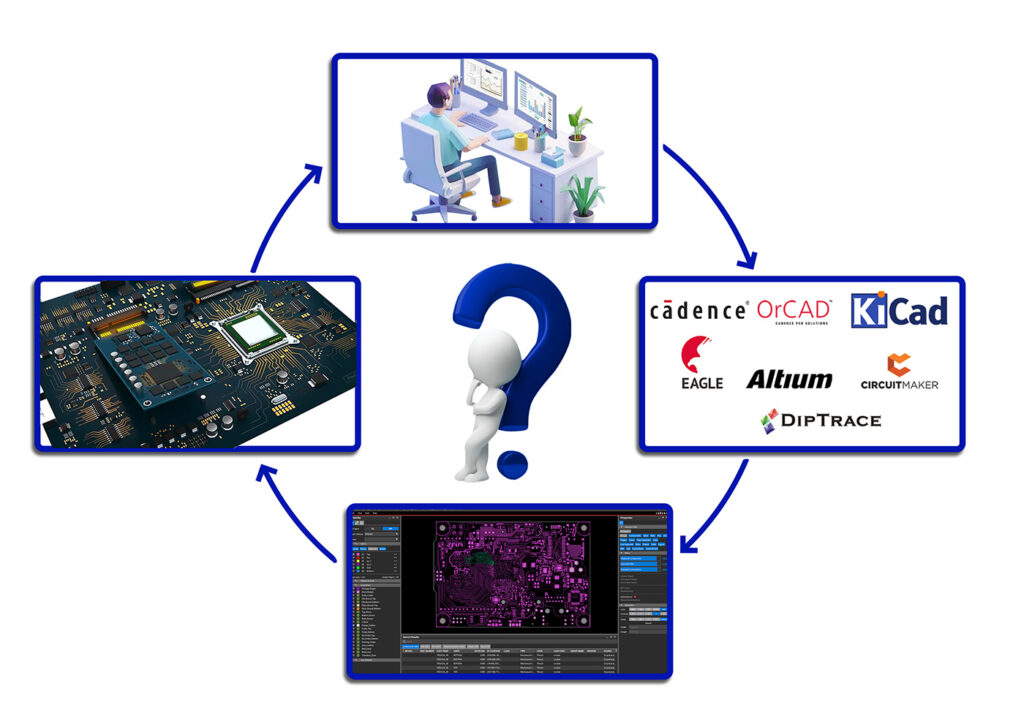
A simple loop makes it stronger: design, build, capture issues, then feed that back into AI-driven PCB design rules.
7) Tools, Use Cases, Benefits, Limits, and Future
Popular AI features in PCB layout design tools.
Common AI features in PCB layout design tools include placement ranking, first-pass routing help, risk flags on top of DRC, and constraint setup helpers. These features work best when your rules are consistent, and your data is clean.
Real-world use cases
- Consumer electronics: dense layouts and high speed.
- Automotive and EV: thermal and long-life targets.
- Aerospace and medical: strict validation needs.
Blind Buried Circuits-style builds, with blind and buried vias and careful stackups, are where AI suggestions can save time because small changes ripple across layers.
Benefits
PCB design using machine learning can reduce design time, improve consistency, and cut iterations.
Limitations
- Data quality controls results.
- AI output must be verified.
- Teams need time to learn new features.
The future
Expect more automation and better feedback loops from test and field data.
Conclusion: AI as a Design Partner, Not a Replacement
AI-driven PCB design is a strong helper, not a replacement for engineers. It can cut routine iterations and highlight risk areas early. But humans still make the final call.
If you learn from Blind Buried Circuits, use AI to move faster on routine work, then slow down on decisions that affect reliability and PCB manufacturing and assembly success.
FAQs: AI and Machine Learning in PCB Design
1) Can AI-driven PCB design create a full PCB without human input?
AI-driven PCB design can draft layouts, but humans still must set constraints and approve the result.
2) Is PCB design using machine learning suitable for high-speed and RF?
Yes. It can flag risky patterns, but you still need simulation and testing for final proof.
3) How accurate are PCB layout design tools with AI features?
They are most accurate when trained on clean, relevant data. Accuracy drops when data is missing or mismatched.
4) Do small teams doing PCB manufacturing and assembly benefit from AI?
Yes. Early DFM warnings and faster first-pass work can help even small teams doing PCB manufacturing and assembly.