

Are you wondering what the reasons for 5G gadgets require such a precise PCB design?
This is because 5G technology requires more frequencies, higher speeds, and less latency than 4G. When working using radio frequency (Radio Frequency) circuits and antennas, tiny design details can affect the quality of quality.
This blog will show you the process of integrating antennas and RF circuits onto five-GPCBs effectively.

Why 5G PCB Design Is Different?
5G networks run at higher frequencies, usually that are in the lower sub-6GHz as well as millimeter wave (mmWave) bands. These frequencies are where electronic signals behave more like lights than lower frequency currents. This means that:
- Signal loss happens more quickly.
- Components require strict tolerances.
- PCB material must exhibit solid performance at high frequency.
- Antenna positioning can’t happen randomly, as it is a key element of the entire 5G antenna PCB concept.
Ordinary PCB manufacturing and assembly methods are not sufficient. The need for an expert RF design skill and a precisely designed production process.

Step 1: Choosing the Right PCB Material
The very first step to the design of 5g PCBs is the selection of materials.
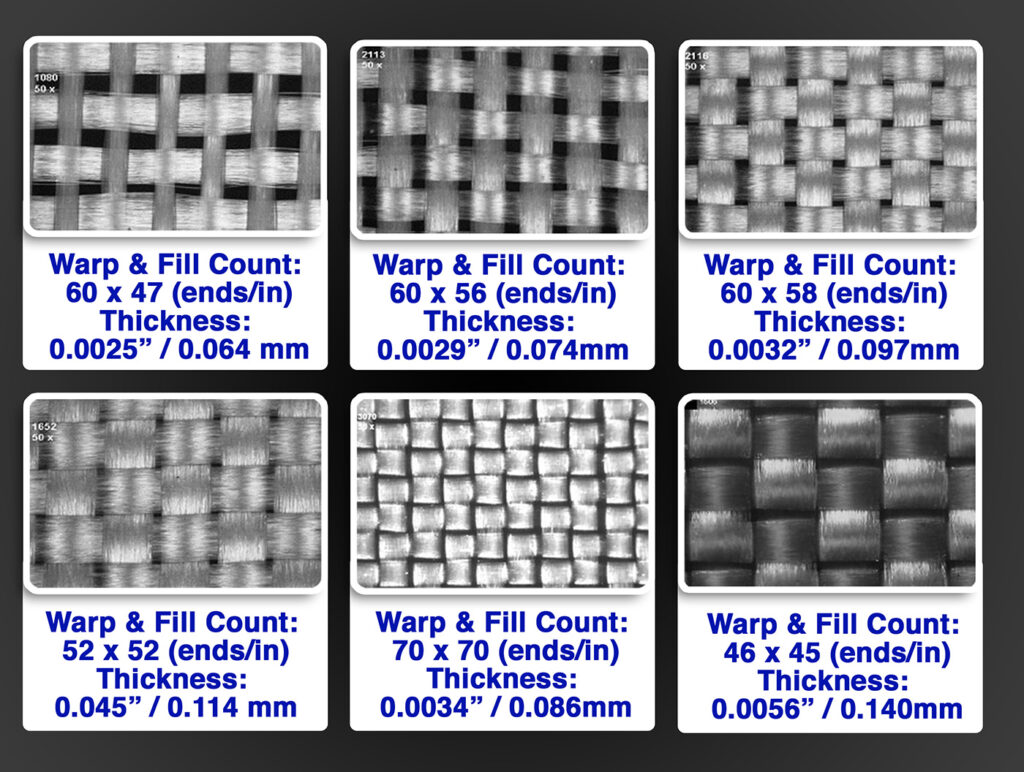
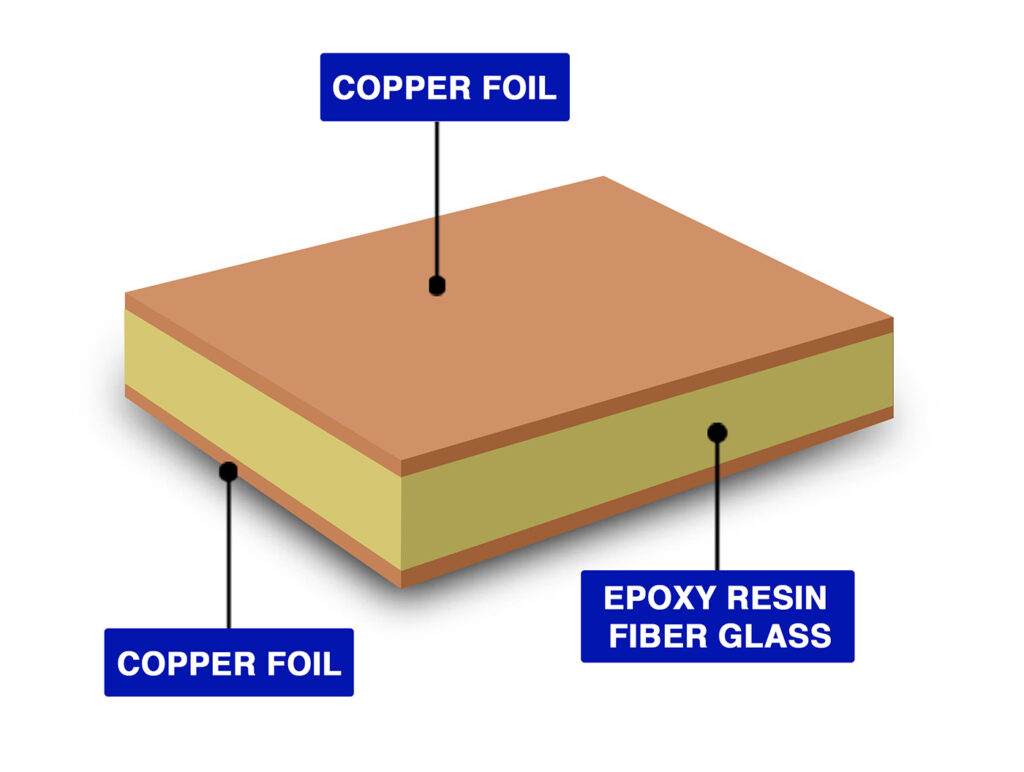
For signals with high frequencies, the standard FR4 material may not be enough. It’s inexpensive and easy to find, but it’s a bit more expensive and has higher dielectric losses, which could lower the quality of signals.
To design the design of RF circuit boards, the engineers typically employ:
- Rogers Laminates to ensure lower loss when operating at high frequencies.
- PTF (Teflon-based) materials that offer outstanding durability and stability.
- Hybrid stack-ups combine FR4 as well as high-frequency cores to aid in cost control.
Tips: Work closely with your RFP PCB maker at the start of your project to pick the best material for the frequency of use, performance, and budget.

Step 2: Antenna Placement and Orientation
The antenna design is the center of a 5g antenna PCB. The location directly impacts the range, integrity of the signal, as well as the performance of the device.
Important guidelines comprise:
- Set the antenna far from any noisy parts like switches, regulators.
- Maintain enough distance between the ground plane and the antenna.
- Beware of running digital tracks at high speeds under the antenna.
An example from the real world: In a compact IoT device, putting an antenna in close proximity to shielding metal could reduce the spectrum of signals. Removing it by 10mm could fix the issue.

Step 3: Impedance Matching
In 5G frequency bands, an impedance mismatch could cause severe reflections as well as losses.
This is the reason RF engineers work on setting up coplanar or microstrip tracks to 50 Ohms.
The best way to ensure a good match:
- Utilize design tools such as ADS or HFSS to simulate.
- Verify the accuracy of your Vector Network Analyzer (VNA) after fabrication.
- You must ensure that the impedance is controlled. Controlled impedance routing for the production of custom PCBs.

Step 4: Controlled Trace Lengths & Routing
In RFPCB manufacturing workshops, the process of routing microwave and RF signals has become a specialized art. The lengths of lines must be precisely measured to prevent altering the frequency of the signals.
Strategies for routing RF lines:
- Try to keep them as short and straight as you can.
- Avoid bends that are sharp 90 degrees -opt for curved pathways instead.
- Create separate RF and high-speed digital tracks in order to limit interference.

Step 5: Grounding and Shielding
The quality of grounding and shielding is crucial when it comes to PCB assembly and manufacturing in RF-related projects.
- Utilize the solid ground planes underneath the RF section.
- For sensitive circuits, add EMI shields.
- Make sure that multiple vias join grounded layers in order to reduce the amount of inductance.
This prevents cross-talk as well as electromagnetic interference from outside from impacting your antenna’s performance.

Step 6: Power Supply Filtering
Designing RF PCBs is a challenge; “noise” isn’t just irritating, it could affect your entire design.
The power supply’s noise could leak into the RF path, which can cause performance to be compromised.
Solutions can include:
- Add LC filters, or even ferrite beads, on source inputs.
- The isolation from the RF power domain away from the digital power domains.
- Utilizing low-noise LDO regulators in sensitive areas.
Step 7: Testing Early and Often
One of the most common mistakes when it comes to RF circuit design is that it’s not testing until the very end.
The effects of high-frequency can be unpredictable. Testing early can help identify issues before they become a problem for mass production.
The most common testing methods:
- Utilize the VNA to measure S-parameters.
- Conduct tests of the antenna pattern inside an echoic chamber.
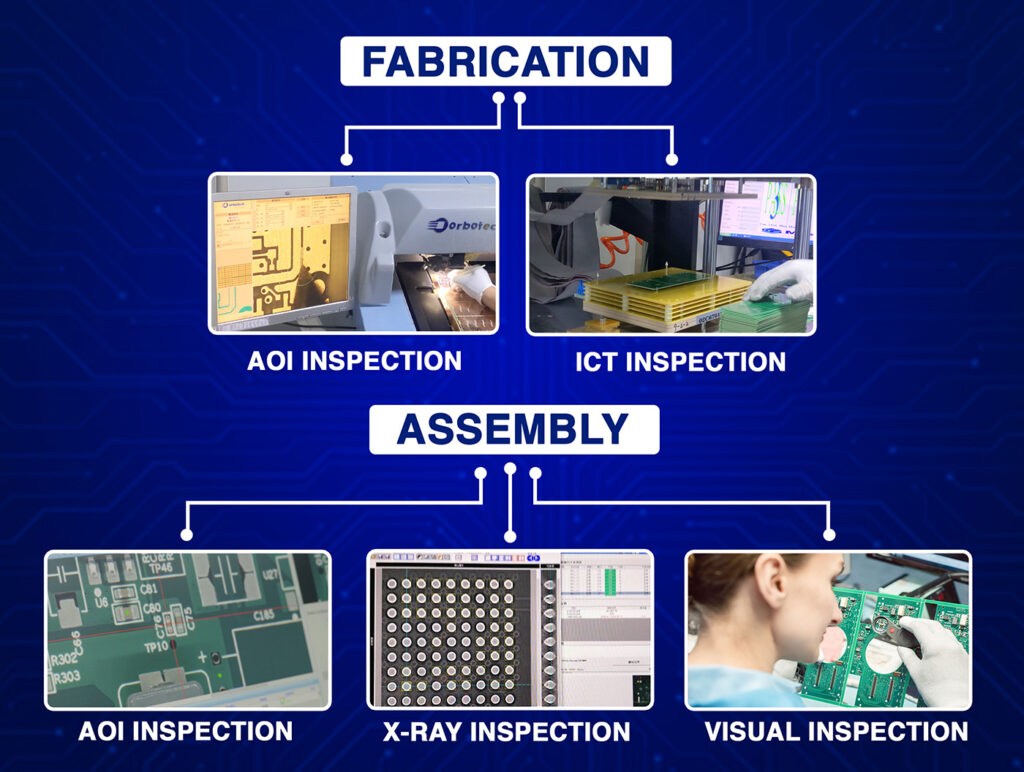
- Prototypes for testing before committing to the full PCB assembly Usa runs.
Designing for Manufacturability (DFM)
High-performance 5g PCB designs don’t only concern the electrical efficiency, you have to make sure the concept will be constructed with a high degree of reliability.
Certain DFM aspects to consider:
- Are there any possibilities for the trace, spacing, as well as via sizes can be produced in mass quantities?
- Are you using materials which can be purchased long-term?
- Do PCB stack-ups correspond to the capabilities of manufacturers?
Collaboration in conjunction with working closely with the manufacturer of the RF PCB when designing can help cut down on time, cost, as well as avoid the need for revisions.
Thermal Management in 5G Boards
When the power is high and especially when using an mmWave antenna, components may become hot.
The excess heat could cause an antenna to lose its sensitivity or lead to premature failure.
A good thermal practice includes:
- By using thermal vias on hot chips.
- Choose materials that have a higher Tg (glass the temperature at which glass transitions).
- Utilizing metal-backed PCBs as power amplifiers.
Prototype, Review, Refine
The best-designed boards don’t always succeed on the first attempt.
This is the reason manufacturing custom PCBs typically begins with preliminary production prior to scaling up to complete PCB manufacturing and assembly.
Prototyping is the process of creating prototypes:
- Validate antenna performance.
- Examine for unusual interruptions.
- Make sure that the circuits are in sync if needed.
Be aware that every millimeter counts for high-frequency PCB design.
Common Mistakes in RF Circuit Integration
Based on the experience of industry professionals, here are some mistakes to steer clear of:
- Combining digital and RF grounds incorrectly.
- Skipping impedance control during layout.
- Utilizing unsuitable material to provide high-frequency performance.
- The idea of putting antennas in as an idea after the fact , instead of during the initial development.
Making these mistakes can help you save countless hours of troubleshooting.
Looking Ahead: 5G and Beyond
5G PCBs face challenges in the present, but higher speeds are expected to come. The subjects such as beamforming antennas, MIMO arrays and sub-THz communication are likely to require even more strict PCB management.
If you can master the basics today, including impedance match to thermal control, you’ll be in good shape for the 6G era and beyond.
Final Thoughts
Making the 5g antenna PCB does not only involve connecting components. Each choice that is made, from the material choice to the location of antennas affects the efficiency. A successful Rf circuit board design involves collaboration among engineers, designers, and testing teams.
Suppose you are looking for a partner who is familiar with customized PCB manufacturing to meet high-frequency requirements. In that case, businesses such as Blind Buried Circuits possess the expertise in tooling and the precision necessary to help bring RF concepts to life without a lot of guesswork.
For further information on the concepts behind the RF PCB layouts, you can consult this complete RF design guide by IEEE.