

A product can have a perfect schematic and a clean PCB layout, but it can still fail in the real world. Many failures come from tiny assembly issues that are hard to spot during a quick lab test. That is why high-precision PCB assembly services matter so much for product reliability.
At Blind Buried Circuits, readers often ask a simple question.
“Why does my board work today, but fail later in the field?”
Most of the time, the answer is not magic. It is process control.
This blog explains what high-precision assembly really means. It also explains how it reduces failures over time, especially when products face heat, vibration, and long run hours.
What High-Precision PCB Assembly Services Really Mean
High-precision assembly is not just “nice looking solder.”
It is a controlled way of building boards.
High-precision services usually focus on:
- Printing the right amount of solder paste every time
- Placing every component accurately, even tiny parts
- Using a stable soldering heat profile that matches the board
- Inspecting the board so that defects do not escape
- Keeping the process clean to avoid future corrosion and leakage
Reliability improves when every build step is repeatable. Repeatable steps create consistent boards. Consistent boards create consistent products.

Why PCB Assembly Services Often Decide Reliability More Than Design
Design defines where things should go. The assembly decides whether those connections are strong and stable. Many assembly problems do not show up right away. A board may pass power-on testing and still fail later.
Common assembly-driven failures include:
- Weak solder joints that crack after vibration
- Solder bridges that short only when the board heats up
- Components placed slightly off the pad, creating uneven stress
- Flux residue that slowly leads to leakage and corrosion
- Hidden defects under packages like BGAs and QFNs

Solder Paste Printing Control
Solder paste printing is the first major quality gate.
If the paste volume is wrong, your solder joints will be wrong.
What poor printing can cause:
- Too little paste cause weak joints and early cracking
- Too much paste results in bridges and shorts
- Uneven paste causes tombstoning on small resistors and capacitors
High-precision lines control printing by focusing on:
- Stencil thickness and stencil opening design
- Print pressure and speed
- Paste condition (age, temperature, and handling)
- Alignment checks before production runs
This step looks simple. But it is where many long-term failures begin.

Accurate Placement For Small Packages
Modern boards use very small parts.
That leaves minimal margin for placement errors.
Placement problems can lead to:
- Fine-pitch pins are not sitting correctly on pads
- QFN pads are not wetting evenly under the part
- Stress points that crack joints during drops or vibration
- Polarity mistakes that cause instant failure
High-precision PCB assembly services improve placement reliability using:
- Camera-based alignment and placement correction
- Calibrated pick-and-place machines
- Verified feeder setup and part pick checks
- Clear polarity control rules and inspection steps
This matters most for packages where joints are complex to inspect by eye.
Reflow Profile Control And Product Reliability
Reflow soldering turns paste into real solder joints.
A bad heat profile can create joints that look “okay,” but age badly.
Common reflow-related reliability issues include:
- Cold joints (paste did not melt correctly)
- Overheating damage to sensitive parts
- Excessive voids under thermal pads
- Warpage that stresses joints during cool-down
Precision assembly teams focus on stable profiles that include:
- Gentle preheat to avoid thermal shock
- A steady soak stage for even temperature
- Correct peak temperature for proper wetting
- Controlled cooling to reduce joint stress
This is also one of the best ways to reduce PCB assembly cost later. When reflow is controlled, you get fewer defects, less rework, and fewer returns. That is how quality can support cost goals without cutting corners.
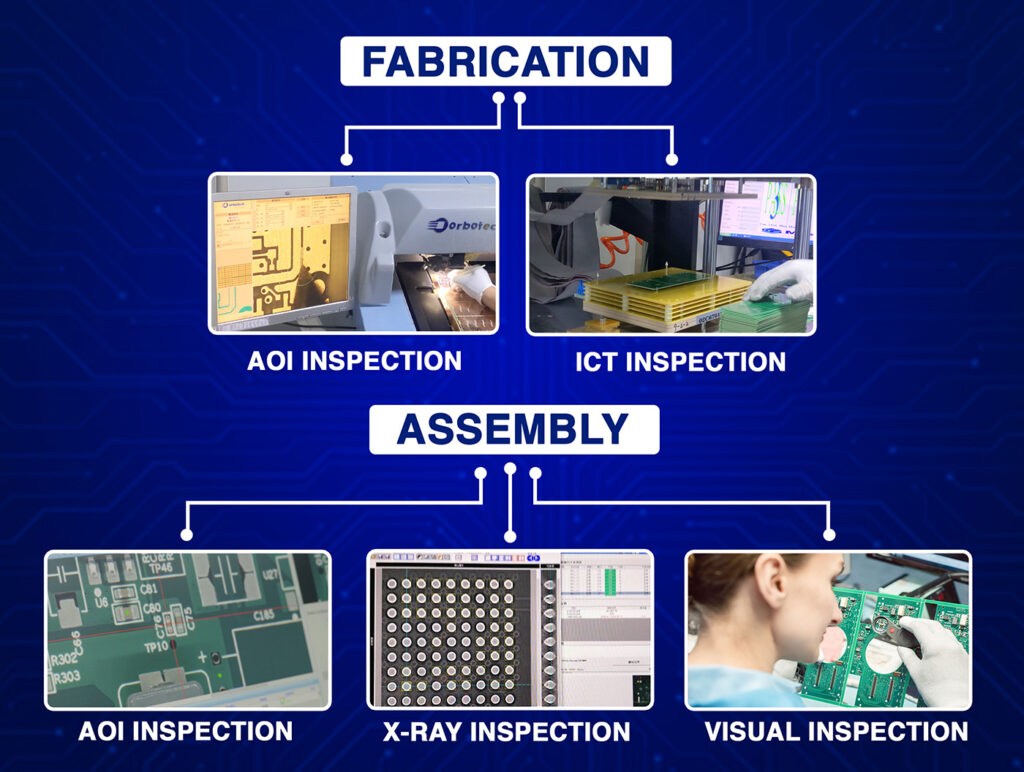
Inspection In PCB Assembly Services: AOI And X-Ray
Good assembly is not only about building. It is also about checking.
AOI Inspection
AOI (Automated Optical Inspection) uses cameras to catch visible issues, such as:
- Missing parts
- Wrong parts
- Wrong polarity
- Misalignment
- Solder bridges and tombstones
AOI helps because it is consistent, and it does not get tired.
It can check the exact details on every board.
X-Ray Inspection For Hidden Joints
Some joints are hidden under components.
You cannot see them with cameras.
X-ray inspection helps detect:
- BGA opens and shorts
- Misalignment under ball-grid packages
- Voids under thermal pads that weaken heat and joint strength
If your design uses BGAs, this can be a significant reliability upgrade.
Cleanliness Control: The Reliability Risk People Forget
A board can have perfect solder joints and still fail later.
One reason is contamination.
Residue and ionic contamination can cause:
- Leakage currents in humid conditions
- Corrosion over time
- Random behaviour that is hard to debug
- Dendrite growth that slowly creates shorts
High-precision processes reduce this risk by controlling:
- Flux selection and handling
- Cleaning steps when required by the product type
- Process discipline (gloves, storage, and clean work areas)
Cleanliness does not feel exciting.
But it has a significant impact on field reliability.
PCB Design Efficiency Tips That Make Assembly More Reliable
Assembly quality improves when the PCB is designed for assembly.
That is where PCB design efficiency tips matter.
Here are practical tips that improve yield and reduce defects:
- Use verified footprints and do not mix library sources without checks
- Keep consistent orientation for parts like diodes and capacitors
- Add clear polarity marks and pin-1 markers on the silkscreen
- Leave enough spacing for soldering and inspection
- Avoid placing tiny parts too close to the board edge
- Add fiducials so machines can align accurately
- Add test points for key rails and signals
These tips often help you reduce PCB assembly cost, too. Less confusion means fewer placement errors.
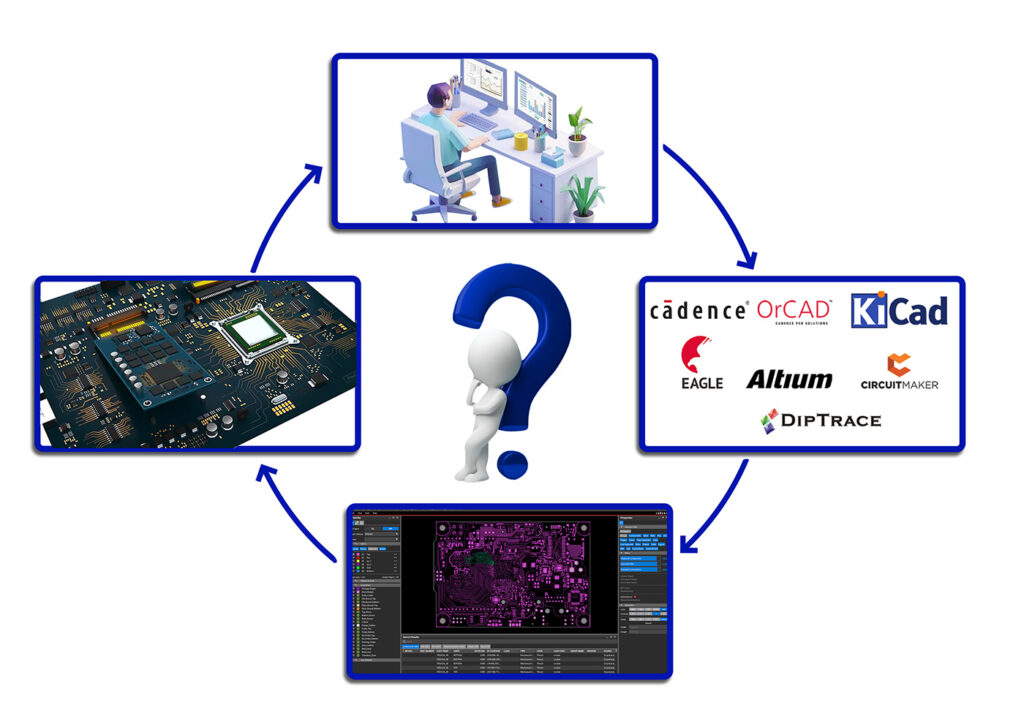
Circuit Design Accuracy Tools That Prevent Assembly-Time Surprises
Some failures do not come from soldering at all. They come from wrong data. Common data issues include:
- Wrong footprint shape or pad size
- Wrong rotation in pick-and-place output
- Wrong polarity in BOM data
- Wrong package height is causing mechanical collisions
- Wrong part number that looks similar but performs differently
Useful circuit design accuracy tools and checks include:
- ERC and DRC checks (electrical and layout rule checks)
- 3D clearance checks for tall parts and connectors
- Footprint verification against datasheets
- Pick-and-place file review for rotation and origin points
- BOM validation for package, tolerance, and voltage rating
These checks also help reduce PCB assembly cost because they prevent scrap and rework. Fixing a footprint before manufacturing is cheap.
Rework Control And Why It Matters For Reliability
Rework happens in prototypes and sometimes in production.
But poor rework can reduce reliability quickly.
Bad rework can lead to:
- Lifted pads
- Damaged components from excess heat
- Weakened joints after repeated heating
- Hidden shorts from solder splash
High-precision assembly environments control rework by:
- Using correct tools and controlled heat
- Following clear acceptance rules after repair
- Tracking rework rates to find root causes
A good goal is simple:
Rework should not create a “weaker board.”
Traceability And Process Control
Reliability improves when processes are measured and improved.
High-precision PCB assembly services often include:
- Lot tracking for paste and key components
- Logged reflow profiles
- Defect tracking from AOI and X-ray
- Feedback loops to stop repeat issues
This matters most when you scale production. A process that works for 10 boards can fail at 10,000 boards if it is not controlled.
Quick Checklist: How To Choose an Assembly That Supports Reliability
Use this simple checklist when you care about reliability:
- Do they control solder paste printing and stencil setup?
- Do they verify placement accuracy and polarity rules?
- Do they profile reflow for the board type and component mix?
- Do they use AOI for consistent inspection?
- Do they use X-rays when hidden joints are involved?
- Do they control cleanliness for long-term stability?
- Do they support DFM feedback using PCB design efficiency tips and data checks?
If you align the process level with product risk, reliability becomes predictable.
Conclusion
High-precision assembly improves reliability because it controls the small things that cause significant failures later. It stabilises paste printing, placement, and reflow. It adds strong inspection and also reduces long-term risks through better cleanliness and data checks using circuit design accuracy tools.
If your goal is a product that lasts longer and fails less, process control is not optional. It is part of engineering, and for readers who want to understand how these details connect from design to real builds, Blind Buried Circuits is a helpful reference point when planning reliable assembly decisions.
FAQs
1: How Do PCB Assembly Services Improve Reliability In High-Vibration Products?
High-precision PCB assembly services improve reliability by controlling solder paste, placement, and reflow, so joints are stronger, and reduces the chance of cracks caused by vibration.
2: How can I reduce PCB assembly cost without reducing reliability?
You can reduce PCB assembly cost by preventing rework with stable printing and reflow control, and reduce PCB assembly cost again by applying clear DFM rules that avoid avoidable defects.
3: Which PCB design efficiency tips Help Most With High-Precision Assembly?
The best PCB design efficiency tips include verified footprints, clear polarity marks, good spacing, and consistent part orientation, and reduce placement mistakes and inspection confusion.
4: Why do circuit design accuracy tools matter before assembly starts?
Circuit design accuracy tools catch footprint errors, rotation issues, and BOM mistakes before production, and prevent scrap builds that fail even with perfect soldering.