

Objective
This guide explains how manufacturing choices affect the life of the battery in electric and hybrid vehicles. It focuses on the real factors that shape long-term performance after a design moves into production. The aim is to show why automotive PCB design must account for heat, vibration, moisture, copper quality, via structure, and testing from the start. It also explains why high-temperature automotive PCBs and clear automotive PCB reliability requirements matter in electrified systems.
Key Takeaways
- Electrified vehicles push boards into hotter and harsher conditions.
- Reliability problems often start with materials, stack-up, vias, or weak process control.
- High-temperature automotive PCBs help resist heat damage and layer separation.
- Thermal cycling, vibration, humidity, and contamination are major failure causes.
- Copper weight, plating, lamination, and testing all affect board life.
- Good automotive PCB design requires close work between design, fabrication, and assembly.
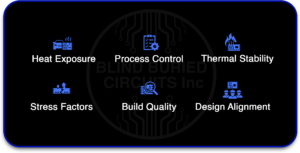
Table Of Contents
- Why Electrification Changes Reliability Needs
- Why Manufacturing Matters In Automotive PCB Design
- Material Choice and High-Temperature Automotive PCBs
- Stack-Up, Copper Weight, And Heat Control
- Vias, Plating, And Interconnect Strength
- Assembly Quality And Mechanical Stress
- Moisture, Corrosion, And Protection
- Testing Around Automotive PCB Reliability Requirements
- Common Manufacturing Mistakes
- Practical Design Rules
- FAQs
1. Why Electrification Changes Reliability Needs
Electric and hybrid vehicles use more power electronics, more sensors, and more control boards than older vehicle systems. These boards work in enclosed spaces and face heat, vibration, humidity, dust, and electrical stress. ISO 16750 describes environmental conditions and tests for vehicle electronics, including temperature, humidity, and atmospheric exposure. Texas Instruments also notes that thermal management is especially important in automotive systems because converters often run in high ambient temperatures and enclosed spaces.
That is why automotive PCB design must look beyond routing and fit. It must consider how the board will survive for years inside a moving vehicle. Blind Buried Circuits says automotive boards are used in harsh real-world environments and in applications such as EV power converters, ABS, displays, and control units.
2. Why Manufacturing Matters In Automotive PCB Design
A board can look right in CAD and still fail in the field if production choices are poor. Manufacturing decides whether the finished board truly matches the design intent.
The wrong laminate can soften under heat. Weak lamination can reduce internal bond strength. Thin copper in the wrong area can raise the temperature. Weak via plating can crack after repeated expansion and contraction. These are all manufacturing issues, but they directly affect reliability. Blind Buried Circuits highlights high-Tg boards, thick copper boards, metal-core boards, HDI structures, and controlled impedance as part of the capability set needed for demanding electronics.
3. Material Choice and High-Temperature Automotive PCBs
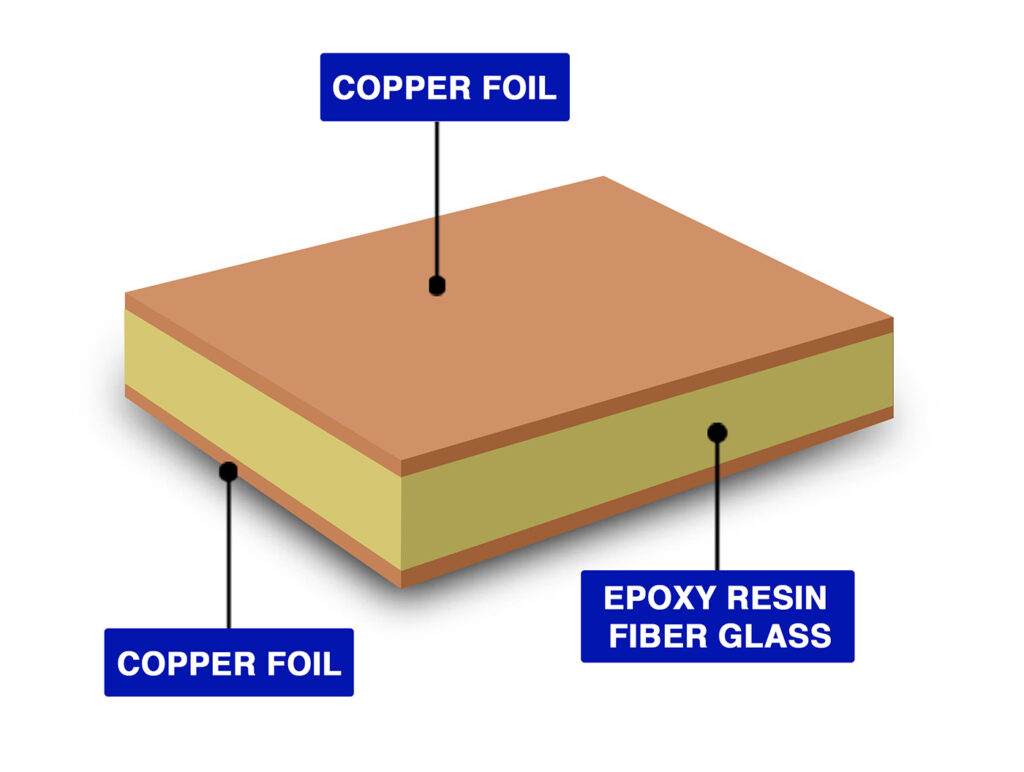
Material choice is one of the first major reliability decisions. Vehicle electronics may face long exposure to heat, repeated thermal cycling, and hot spots near power devices. Texas Instruments explains that thermal management aims to keep junction temperature at or below a safe value, and notes that automotive-qualified devices commonly target maximum junction temperatures of 125°C or 150°C.
The board material must stay stable while nearby parts run hot. Blind Buried Circuits warns that using standard FR-4 instead of high-Tg material in harsh designs can lead to failure, and it recommends high-Tg materials for high-heat conditions.
High temperature automotive PCBs help by offering:
- Better shape control under heat
- Lower risk of delamination
- Better resistance to repeated thermal stress
- Stronger support for power zones
Not every board needs the same laminate, but every board needs material matched to real use.
4. Stack-Up, Copper Weight, And Heat Control
A stack-up is not only about routing. It also affects heat flow, current-carrying ability, and board balance. In electrified vehicles, some boards must move real current while staying compact.
Blind Buried Circuits notes that in harsh environments, heavier copper can improve current-carrying capacity and mechanical strength, with 2 oz to 6 oz copper used in more demanding cases. The company also points to heat sinks, thermal vias, and better component placement as practical thermal tools.
Important stack-up questions include:
- Is the copper weight high enough on the power paths?
- Are layers balanced to reduce warpage?
- Is heat spread through planes and vias?
- Are hot parts kept away from sensitive parts?
Poor stack-up planning can create hot spots, board warp, and faster solder fatigue.
5. Vias, Plating, And Interconnect Strength
In many failures, the weak point is the interconnect. Vias expand and contract as the board heats and cools. If plating is weak, cracks can form over time.
This matters even more in dense layouts. Blind Buried Circuits says its HDI capability includes blind, buried, stacked, and staggered microvia structures. It also notes that HDI routing can reduce stress on interconnections and improve durability when done well.
Reliable vias depend on:
- Good drilling
- Proper hole preparation
- Enough copper plating
- Sensible aspect ratios
- Stable fill and cap control where needed
For automotive PCB reliability requirements, via integrity is never a minor detail.
6. Assembly Quality And Mechanical Stress
The bare board is only part of the story. Assembly quality also shapes board life. In an electrified vehicle, solder joints face both temperature swing and vibration. AEC board-level guidance exists to study thermal fatigue life in surface-mounted components, which shows how important board-level stress is in long-term use.
Solder problems often come from a chain of small issues:
- Uneven copper that causes thermal imbalance
- Poor pad design
- Excess board warpage
- Wrong reflow profile
- Heavy components with weak support
Good automotive PCB design helps assembly by creating balanced copper, sound pad geometry, and clear thermal paths.
7. Moisture, Corrosion, And Protection
Heat is not the only threat. Moisture and contamination can quietly reduce board life. ISO 16750 includes humidity and atmospheric exposure in its framework for vehicle electronics. Blind Buried Circuits recommends conformal coatings, sealed enclosures, and corrosion-resistant finishes for harsh environments.
Road vehicles may expose boards to:
- Condensation
- Salt and spray
- Dust and debris
- Chemical vapors
- Long field exposure
For high-temperature automotive PCBs, moisture can be even more damaging when combined with heat and voltage stress.
8. Testing Around Automotive PCB Reliability Requirements
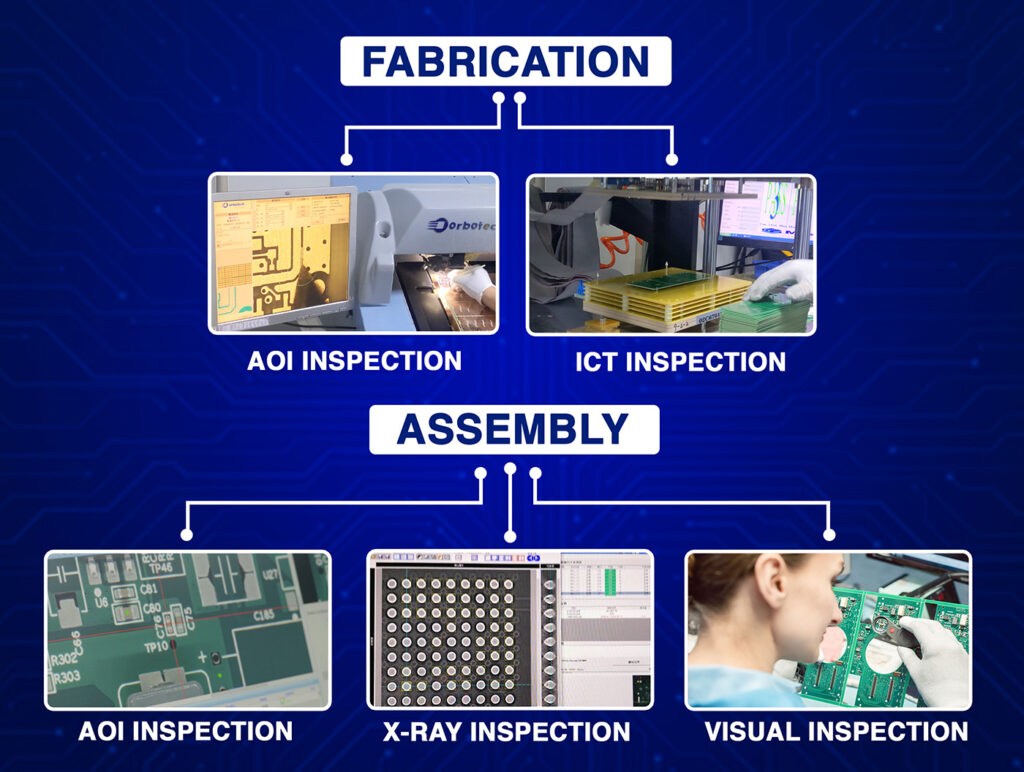
An electrical test is necessary, but it is not enough. A board may pass continuity today and still fail after months of heat and movement. That is why automotive PCB reliability requirements usually include environmental and mechanical testing.
Blind Buried Circuits lists thermal cycling, vibration and shock, and salt spray testing as reliability checks for harsh boards. ISO 16750 centres test around real vehicle conditions. IEC 60068 methods are also widely used for dry heat, vibration, shock, and damp heat evaluation.
Useful tests often include:
- Thermal cycling
- Vibration and shock
- Humidity exposure
- Salt or corrosion testing
- Cross-section analysis
- Microsection checks on plated holes and vias
9. Common Manufacturing Mistakes
Some reliability losses come from obvious mistakes. Others come from small shortcuts.
Common examples include:
- Using standard laminate where high-Tg material is needed
- Making copper too thin on high-current paths
- Pushing via structures beyond a stable process window
- Ignoring board warpage risk
- Poor coating coverage
- Weak control during lamination or plating
Blind Buried Circuits directly warns that wrong material choice, poor placement, and inadequate protective coating can lead to failure in harsh-use boards.
10. Practical Design Rules
The best way to improve reliability is to make manufacturing part of the design process early.
A practical checklist looks like this:
- Match the laminate to the real temperature exposure
- Use high-temperature automotive PCBs where the thermal load justifies it
- Build a balanced stack-up
- Give power paths enough copper
- Keep heat away from sensitive parts
- Choose via structures that the fabricator can control well
- Plan for coating, sealing, and inspection from the start
- Test for the actual vehicle environment
Blind Buried Circuits supports this design-to-manufacturing approach with services spanning PCB design, fabrication, assembly, prototyping, and testing for automotive work.
FAQs
What Makes Automotive PCB Design Different?
Automotive PCB design must survive vibration, humidity, thermal cycling, and long service life. It also supports systems where failure can affect safety and uptime.
Why Are High-Temperature Automotive PCBs Important?
They help boards stay stable in hot areas and under repeated thermal stress. That lowers the risk of warping and delamination.
Do Automotive PCB Reliability Requirements Focus Only On Testing?
No. They also depend on materials, stack-up, copper design, via quality, assembly control, and surface protection.
Why Do Vias Fail In Automotive Boards?
Vias can fail because of weak plating, poor drilling, bad lamination, or repeated thermal expansion and contraction.
How Should Teams Think About Long-Term Reliability?
Blind Buried Circuits fits into the discussion because reliable boards come from close work between design, fabrication, and testing from the start.