

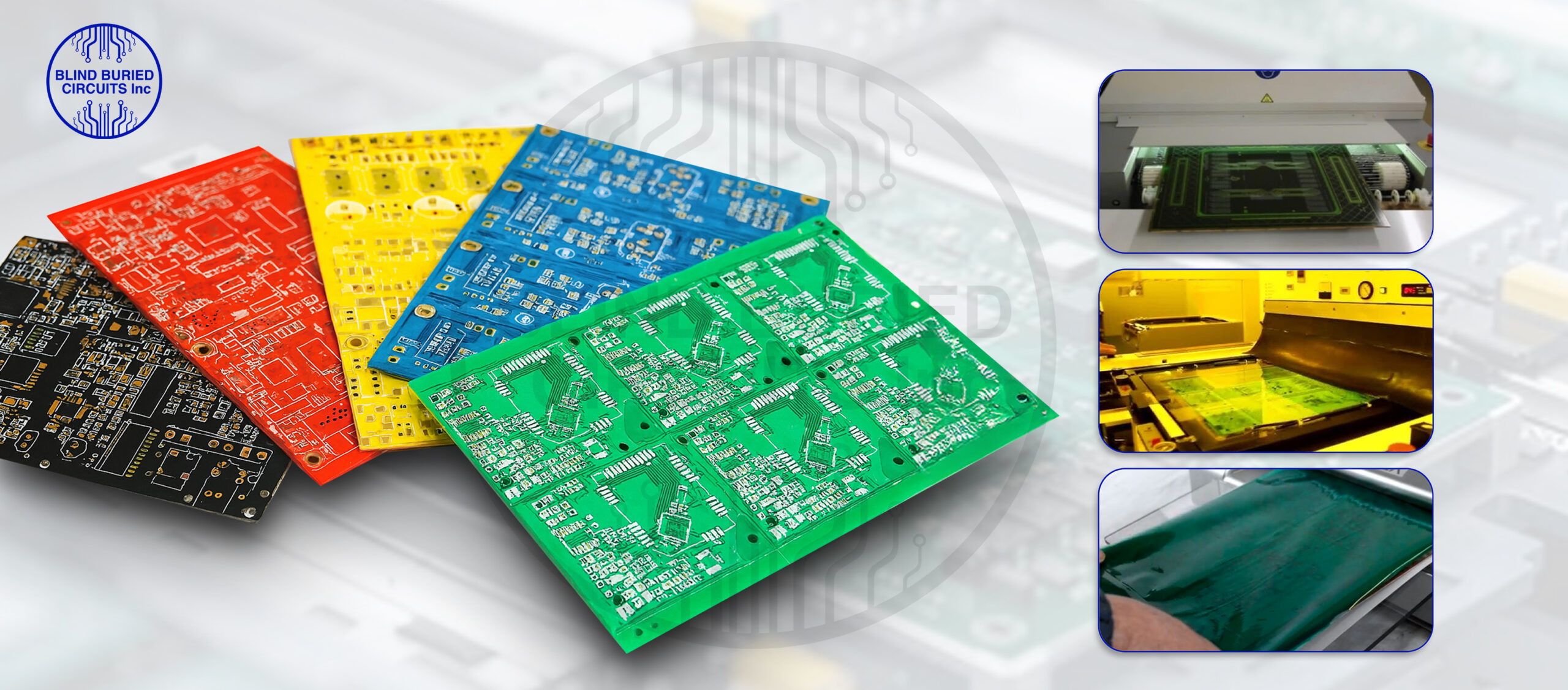
When examining a printed circuit board (PCB), have you ever wondered why it has a layer of green, blue, or even red? That layer is called soldermask. Aside from being aesthetically pleasing, the solder mask in PCB manufacturing serves to protect the circuit board and facilitate its proper functioning. However, did you know that your choice of soldermask material can influence your PCB costs?
In this blog, we will discuss what solder mask is, its applications, its importance, and how different materials and techniques can affect the price of your printed circuit board assembly manufacturing. Whether you’re a student or a hobbyist working with a professional PCB board manufacturer, this knowledge will enable you to make informed choices for your next project.
What is Soldermask in PCB?
A solder mask is much like a raincoat for your circuit board. It shields the copper traces from moisture, dust, and unintentional short circuits. Without a solder mask, the copper would be exposed, which would, over time, lead to damage during the soldering of components.
Key advantages of soldermask:
- Stops solder bridges from forming during assembly
- Prevents oxidation and corrosion of copper
- Enhances electrical insulation
- Enhances the aesthetics of the board, making it look tidy and polished

Types of Soldermask Material
In the industry, these are the main types of soldermask materials:
- Epoxy Liquid Solder Mask (LPI) – This is a prevalent type. It’s a liquid that’s applied to a board and then cured by exposure to UV light.
- Dry Film Solder Mask (DFSM) – This is a thin film that is laminated to the board and later exposed to light to form the desired pattern.
- Inkjet Soldermask – This is a newer technique that uses an inkjet printer to apply soldermask only onto the designated areas on the board.

Every material is suitable for specific applications and has its unique costs and advantages.
LPI supports most standard boards, while DFSM is often used for boards that contain excellent features. More and more projects are becoming available using inkjet, as it’s more cost-effective.
- Soldermask Coating: The selected soldermask material is applied to the board. For LPI, it is typically sprayed or screen printed. With DFSM, the film is applied. Only the required areas are masked using inkjet printers.
- Pre-Curing: The board is partially cured (hardened) so that the mask can remain stable in the following steps.
- Imaging: A photo mask is used, or a laser directly imprints a design onto the board using ultraviolet radiation. This step also solidifies portions of the solder mask.
- Developing: The excess solder mask is removed, leaving only the desired areas covered.
- Final Curing: The board undergoes complete curing to achieve the toughness and durability of the solder mask.
Costs of Solder Mask Material and PCB
Let’s discuss the most relevant soldermask material and PCB cost considerations.
1. Type of Material
- LPI (Liquid Photoimageable) is often the most cost-effective option. Works best for standard boards.
- DFSM (dry film): costlier. Ideal for complex boards with fine pitch or high density. Used in smartphones and microwave PCBs.
- DM Inkjet: Economical for small volume orders with intricate designs, as it wastes less material and ink.
2. Application Methods
Screen Printing or Curtain Coating: These methods may not be as efficient for boards with extensive blank space, as they can lead to material waste.
Inkjet: Costs can be lowered for specific designs because it only applies soldermask where it is needed.
3. Board Complexity
High-density boards, which often require precise solder mask application, are manufactured by a microwave PCB fabricator. These components and fine lines often necessitate additional precise solder mask application, which can increase costs.
Multilayer boards: More layers may also lead to additional careful solder mask application, which increases the cost.
4. Color and Special Features
- Standard colors (green): Typically, the most affordable.
- Special colors (red, blue, black, and white): These may incur additional costs.
- Some materials, such as solder mask, are designed for high temperatures or exceptional chemical resistance. These are important for specific applications, such as PCBs in microwaves, but they increase costs.
Tips For Choosing The Right Soldermask
- Contact your manufacturer: Every PCB board assembly has its approach towards manufacturing. Inquire about the solder mask options they have and which ones would work best for your design.
- Ask yourself: If the circuitry will be used in harsh environmental conditions, such as high temperatures, humidity, or exposure to chemicals, inquire about exceptional solder mask grades.
- Stick to your budget: For most projects, standard LPI soldermask provides the best value for money and effectiveness.
- Consider aesthetics: If it’s essential, inquire about color options, but be cautious that some may come at a premium.
Soldermask and High-Frequency PCBs
For high-speed and microwave application boards, the solder mask may influence signal paths. For 5G, radar, or satellite applications, certain solder mask materials may alter signal propagation. When dealing with microwave PCB manufacturers, inquire about soldermask choices that won’t interfere with signal integrity.
Common Mistakes and How to Avoid Them
- Too much solder mask or too little: Overly large or small apertures can lead to issues during assembly, and in some cases, result in board failure.
- Using the wrong solder mask material: A low-grade solder mask on a PCB that is subjected to heat or high-frequency signals can result in board failure.
- Not confirming with the manufacturer: Every fabricator has different capabilities. Always verify what they can do before you finalize your design.
Product Highlights: What Makes a Good Solder Mask?
- A smooth finish enhances maintenance and professional appearance.
- Strong adhesion ensures that the layer remains securely adhered to the board, even in harsh conditions.
- The best types of soldermask have the right thickness, meaning protective without being overly problematic.
- Easy to see with good color aids in inspection and repair.
Final Thoughts
Soldermask serves a crucial function that extends beyond aesthetics on your PCB. The selection of soldermask material impacts the functionality, appearance, and the overall financial cost associated with manufacturing the board. By consulting with your PCB board assembly manufacturing partner and understanding the available options, you can make informed decisions that balance your requirements and budget.
The difference is especially noticeable regardless of whether you are designing a simple gadget or a complex microwave device. This is fundamental knowledge that every designer and engineer should hold dear.