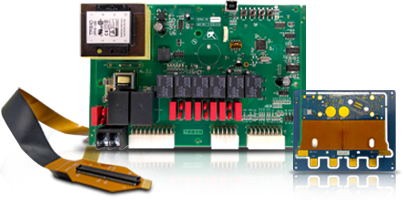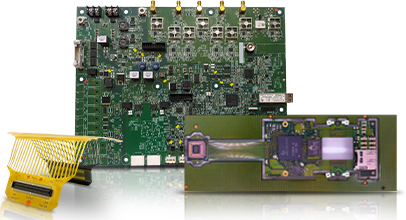



Flex PCBs are among the most complex circuit boards to manufacture. Unlike traditional rigid PCBs, they are designed to bend, fold, and fit into compact spaces while maintaining reliable electrical performance. This makes them a preferred choice for applications such as wearable devices, medical equipment, aerospace systems, automotive electronics, and advanced consumer products.
However, the very features that make flex PCBs valuable also make them more challenging to produce. Material selection, stack-up design, fabrication processes, and quality requirements all demand greater precision than standard PCB manufacturing. Even in quick-turn projects, these complexities can influence production schedules and lead times.
Understanding the factors behind these challenges can help engineers and buyers plan more effectively and avoid unnecessary delays. Here are the seven most common reasons flex PCB quick-turn orders take longer than expected; and what you can do to prevent them
Key Takeaways
- PCB material shortages, especially polyimide film scarcity, are among the most common yet least visible causes of flex PCB delays. Always confirm material stock before ordering.
- PCB supply chain issues are global and can hit your fab without warning. Work with fabs that hold safety stock.
- Most PCB manufacturing delays on quick-turn orders start with design file problems. Clean Gerbers and a pre-production DRC review save days.
- High-layer PCB availability issues are real. Designs with 5+ layers have very limited quick-turn options. Plan accordingly and confirm fab capability early.
- Surface finish selection, testing requirements, and capacity scheduling all add time, usually silently, and often without a heads-up from the fab.
- Buffer time is not optional. Even a “5-day” quick-turn order can take 10 or more business days when multiple delay factors stack.
- Always ask your fab direct questions: Is the material in stock? Do you have a dedicated quick-turn lane? Is your required finish done in-house?
1. PCB Material Shortage Holds Up Production Before It Even Starts
Flex PCBs are built on polyimide (PI) film, not FR4 like standard rigid boards. Polyimide is thinner, heat-resistant, and flexible. Very few global suppliers also produce it.
When demand goes up, especially from the EV, medical, and consumer electronics sectors, polyimide film goes on allocation. Fabs that did not pre-order enough stock wait. And while they wait, your order does too.
What goes short during a PCB material shortage:
- Polyimide base films (1oz and 2oz variants)
- Rolled annealed (RA) copper foil used for dynamic flex applications
- Acrylic and epoxy-based adhesives for flex lamination
- Coverlay films (polyimide + adhesive overlays that protect flex traces)
- Stiffener materials like FR4 sheets and stainless steel
Even one missing material stops the entire build. Fabs cannot substitute randomly; every layer in a flex stack-up must match your original specification exactly.
What you can do: Ask your fab upfront if all materials for your specific stack-up are in stock before you place the order. Do not assume. A 30-second question saves days of waiting.

2. PCB Supply Chain Issues Create Invisible Delays
Even when your fab has good systems in place, upstream PCB supply chain issues can still hit them and hit you.
Flex PCB raw materials come from all over the world. Polyimide films are largely sourced from Japan and South Korea. Copper foil is produced in Japan, Chile, and China. Specialty adhesives often come from Germany and the US. If any node in that chain gets disrupted, lead times stretch.
Common supply chain problems that cause delays:
- Port congestion is adding 1 to 3 weeks to material shipments
- Single-source suppliers with no backup vendors
- Customs holds on specialty materials
- Geopolitical disruptions are cutting off key regional suppliers
- Regional factory shutdowns due to power restrictions or labor issues
The tricky part is that you won’t always know this is happening. Your fab may not know immediately, either. By the time the shortage is confirmed, your order is already behind.
What you can do: Work with fabs that maintain buffer stock of common flex materials. Ask specifically: “Do you hold safety stock for polyimide films?” Fabs that do are significantly more reliable for quick-turn work.

3. Design File Errors Trigger PCB Manufacturing Delays
This is the most underestimated cause of PCB manufacturing delays, and it starts before the fab even touches a machine.
When you submit your Gerber files, the fab runs a Design Rule Check (DRC). If your files fail, production stops. You get a rejection report. You fix the files, resubmit, and the DRC runs again. Every cycle burns time.
Most common flex PCB design file issues:
- Missing or incorrect bend radius specifications
- No defined transition zones between rigid and flex sections
- Trace widths too narrow for the chosen polyimide base material
- Incomplete or mismatched layer stack-up definitions
- Missing coverlay apertures or incorrect coverlay openings
- Via structures not suited for flex applications (vias should never sit in the bend area)
- No stiffener callouts where connectors or components are placed
Each DRC failure adds a minimum of 24 to 48 hours. If your design requires multiple revision rounds, that can easily add 4 to 6 extra days to a quick-turn order.
What you can do: Request a free DRC review before submitting files for production. Most quality fabs offer this. Catching one stack-up error early saves more time than any rush fee can recover.

4. High Layer PCB Availability Issues Limit Your Fab Options
A 1-layer or 2-layer flex board is relatively straightforward to build quickly. A 4-layer, 6-layer, or 8-layer flex circuit is a different story entirely.
High-layer PCB availability issues are real. Most quick-turn services are optimized for low-layer counts. High-layer flex boards require multiple lamination cycles, each with specific temperature and pressure profiles. They require precision laser drilling between layers. They need longer plating cycles and more complex impedance control.
Very few fabs have the equipment, process control, and trained staff to build high-layer flex boards reliably.
If you need a 6-layer flex board in 5 days, the pool of fabs that can actually do it is very small. And those fabs are almost always backlogged.
What you can do: If your design requires more than 4 layers, start your fab search early. Confirm layer count capability and current lead times before finalizing your design. Some high-layer designs can be re-architected into flex-rigid constructions that are faster to build.
5. Special Surface Finishes Add Hidden Days to Your Order
Surface finish is often an afterthought in design, but it has a direct impact on your delivery window.
Standard rigid PCBs often use HASL, which is fast and cheap. Flex PCBs rarely use HASL because the thermal shock and uneven surface are problematic for fine-pitch components and dynamic flex applications.
Flex PCB surface finish options and their time impact:
- OSP (Organic Solderability Preservative): Fast, 1–2 days. Good for flat pads, not ideal for repeated assembly.
- ENIG (Electroless Nickel Immersion Gold): Most common for flex. Adds 1–2 days—flat, reliable surface for fine-pitch components.
- ENEPIG (Electroless Nickel Electroless Palladium Immersion Gold): Best for wire bonding and mixed assembly. Adds 3–4 days minimum.
- Immersion Silver: Moderate lead time. Tarnishes quickly, not ideal for long shelf life.
- Immersion Tin: Decent flatness, but whisker risk over time on flex applications.
If your fab does not run the finish in-house, they outsource it. That means your boards leave the fab, go to a finishing house, and come back. That process alone adds 3 to 5 business days.
What you can do: Confirm whether your required finish is done in-house. ENIG in-house is a baseline expectation for any serious flex PCB fab.
6. Fab Capacity Crunches Push Quick-Turn Orders Back in Line
“Quick-turn” is a service, not a guarantee. At many fabs, quick-turn orders sit in the same queue as standard orders. When capacity fills up, everything slows down.
When capacity issues are at their worst:
- October through December, Q4 product launch rush
- February and March, post-Chinese New Year backlog
- Before major electronics trade shows (CES, Electronica, MEDICA)
- When a large OEM drops a big, urgent order that takes priority
The problem is that most fabs lack a dedicated production lane for quick-turn flex orders. Your rush job competes with regular production. You paid the expedited fee, but the boards are still waiting behind a batch of standard orders.
At Blind Buried Circuits, dedicated quick-turn capacity is a key part of meeting tight windows, but this is not standard practice across the industry. Most fabs mix quick-turn with general production scheduling.
What you can do: Ask directly, “Do you have a dedicated quick-turn lane for flex PCBs right now, or does it go into the general queue?” The answer tells you everything.
7. Testing and Quality Inspection Take Longer Than Buyers Expect
Flex PCBs are used in medical devices, aerospace assemblies, defense electronics, and industrial equipment. Failed boards in these applications are not just costly, they are dangerous. So testing is thorough. And thorough takes real time.
Tests that add time to flex PCB quick-turn orders:
- Flying probe electrical test: Checks for opens and shorts on all nets. Standard on quick-turn. Adds 4 to 12 hours depending on net count.
- Impedance testing: Required for high-speed differential pairs and RF designs. Adds 1 to 2 days.
- Flex cycle / bend life testing: Validates the board survives repeated bending at the defined bend radius. Adds hours to days depending on the cycle count spec.
- Cross-section microsection analysis: Checks plating thickness, layer adhesion, and via fill quality. Destructive test. Adds 1 day.
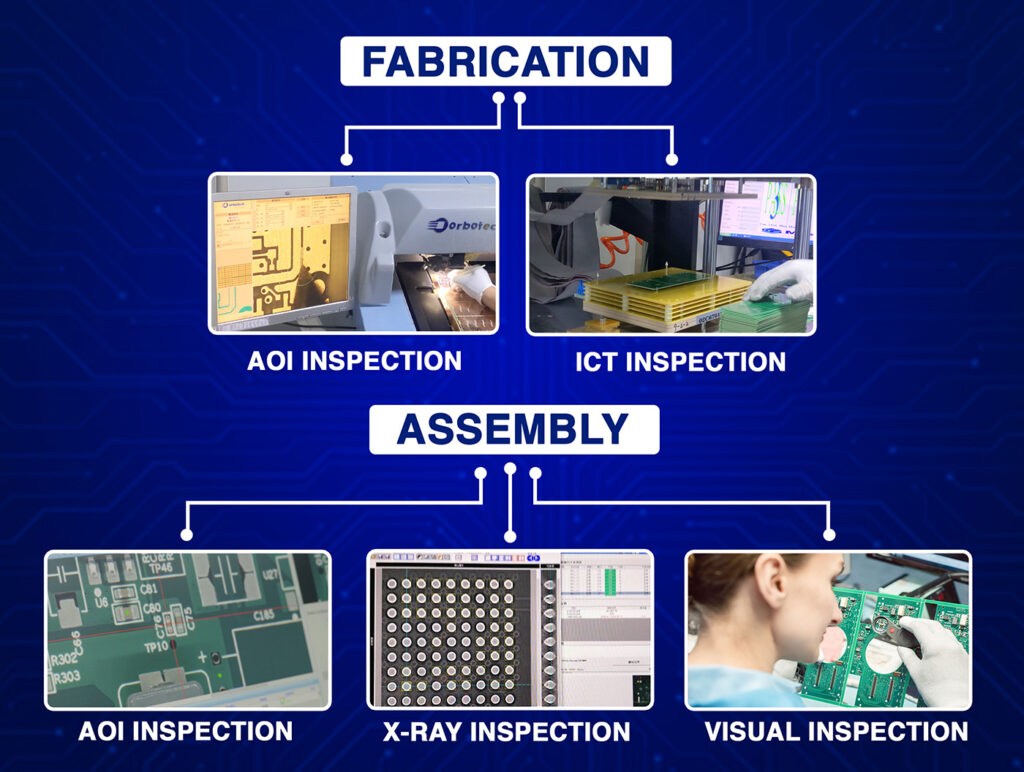
- AOI (Automated Optical Inspection): Scans for surface defects and trace integrity. Usually integrated into production flow, but adds time to complex designs.
- IPC-6013 class verification: Required for certain industries. Documentation and verification add 1-2 days.
If a board fails any test, the entire batch may need rework or a complete remake. That resets your timeline entirely.
What you can do: Know your IPC class requirement before ordering. IPC Class 2 is standard. Class 3 (required for aerospace and medical) triggers additional testing protocols and longer inspection windows. Build this into your schedule, not as an afterthought.
FAQs
Q1. What is the most realistic quick-turn lead time for a flex PCB?
For a 1–2-layer flex PCB with a polyimide base, ENIG finish, clean design files, and no special testing requirements, 3-5 business days is achievable at well-equipped fabs. Most real-world orders take 5 to 10 business days, once file review, material staging, and queue time are factored in. Any fab quoting a 24-hour turnaround for a flex PCB should be questioned carefully.
Q2. How does a PCB material shortage affect polyimide-based flex boards differently from FR4 boards?
Polyimide film is produced by a small number of global manufacturers, mainly in Japan and South Korea. When industries like EVs, medical devices, and aerospace all ramp up production simultaneously, polyimide is quickly allocated. FR4, by comparison, is produced by hundreds of global suppliers and is widely available. A polyimide shortage has a direct, immediate impact on flex PCB production with very few substitution options.
Q3. Can choosing a domestic fab eliminate PCB supply chain issues?
Partially. Domestic fabs reduce shipping delays and time-zone communication barriers. But most still import raw materials globally, particularly polyimide films and rolled annealed copper foils. A global supply chain disruption will still affect domestic fabs. The advantage of a domestic fab is faster responsiveness, not full insulation from supply chain risk.
Q4. What are the most common design file errors that cause PCB manufacturing delays on flex orders?
The top errors are: missing bend radius callouts, vias placed in flex bend zones (which cause cracking), incorrect or undefined layer stack-up, missing coverlay aperture definitions, and inadequate trace-to-edge clearance in the dynamic flex area. Each of these causes a DRC rejection and adds at least one revision cycle to your timeline.
Q5. Why do high-layer PCB availability issues affect flex designs more than rigid designs?
High-layer rigid boards are well established in many fabs. High-layer flex boards require specialized lamination presses, controlled-impedance routing across flexible layers, and specific drilling protocols to prevent delamination. Very few fabs worldwide have validated processes for 6+ layer flex. Those that do typically run at high utilization, meaning availability for quick-turn, high-layer flex work is genuinely scarce.
Q6. Is it possible to shorten the testing time without compromising the quality for a
quick-turn flex PCB order?
Yes. For prototype quantities, flying probe testing is faster than bed-of-nails fixturing and does not require upfront tooling. Skipping cross-section analysis is acceptable for prototypes, but should not be skipped for production runs in regulated industries. Impedance testing can sometimes be combined with production panel testing to save time. The key is to define your quality requirements upfront so the fab can plan the testing sequence efficiently rather than adding tests reactively.