

Objective
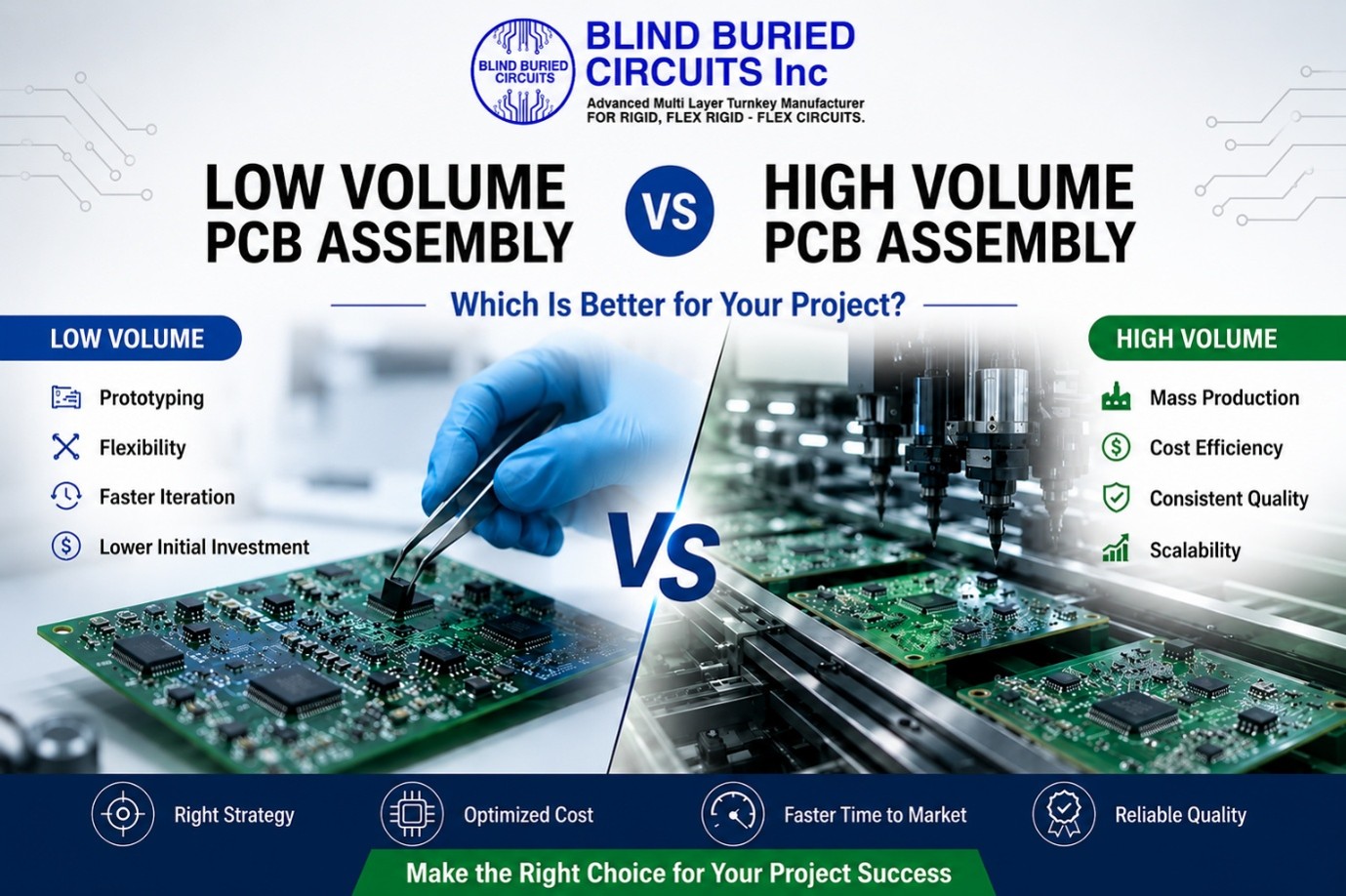
This guide explains the difference between low volume PCB assembly and high-volume PCB assembly, helping businesses choose the right manufacturing strategy based on cost, production goals, flexibility, scalability, and product lifecycle stage.
Key Takeaways
You will learn how to:
- Understand the difference between low volume and high-volume PCB assembly
- Determine which assembly approach fits your project stage
- Reduce manufacturing costs without sacrificing flexibility
- Improve scalability from prototyping to production
- Avoid common PCB assembly planning mistakes
- Choose the right PCB assembly strategy for long-term manufacturing success
Table Of Contents
- Introduction
- What Is Low Volume PCB Assembly?
- What Is High Volume PCB Assembly?
- Key Differences Between Low Volume and High-Volume PCB Assembly
- Common Uses and Industry Applications of Low Volume PCB Assembly
- Common Uses and Industry Applications of High-Volume PCB Assembly
- Common Challenges in Low Volume and High-Volume PCB Assembly
- Why the Right PCB Assembly Strategy Matters
- Partner with Blind Buried Circuits for Reliable PCB Assembly Solutions
Introduction
Choosing the right PCB assembly volume is one of the most important decisions in electronics manufacturing. The production approach you select affects manufacturing costs, lead times, product quality, scalability, and overall project success.
Many businesses face uncertainty when deciding whether to use low volume PCB assembly or high-volume PCB assembly. Producing too many boards too early can increase inventory costs and create challenges when design changes are required. On the other hand, relying on small production runs for a mature product can limit efficiency and increase per-unit manufacturing costs.
Understanding how each assembly method supports different stages of the product lifecycle helps businesses make smarter manufacturing decisions. Whether you’re developing a prototype, validating a design, or preparing for large-scale production, choosing the right assembly strategy can help improve efficiency and reduce risk.
In this guide, we’ll explore the differences between low volume PCB assembly and high-volume PCB assembly, along with their benefits, applications, and key considerations for selecting the right approach for your project.
What Is Low Volume PCB Assembly?
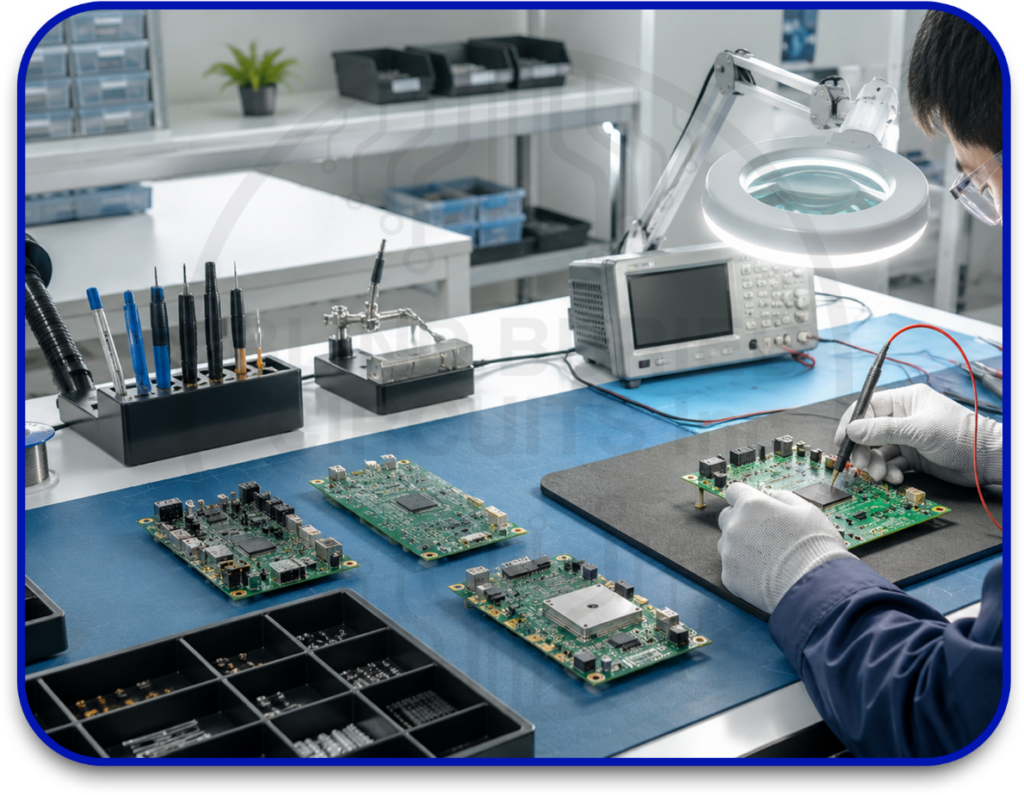
Low volume PCB assembly refers to the production of a smaller number of assembled printed circuit boards, typically used for prototyping, design validation, pilot runs, and limited production requirements.
During product development, electronic designs often require testing, evaluation, and multiple revisions before they are ready for large-scale manufacturing. Producing large quantities at this stage can result in unnecessary costs and excess inventory if modifications become necessary.
Low volume PCB assembly provides the flexibility needed to validate functionality, test performance, and refine designs before committing to mass production. This approach allows manufacturers to identify potential issues early while maintaining greater control over development costs.
Benefits of Low Volume PCB Assembly
- Faster prototyping and product testing
- Greater design flexibility
- Lower upfront manufacturing investment
- Easier implementation of engineering changes
- Reduced inventory and production risk
- Faster feedback during product development
What Is High Volume PCB Assembly?
High volume PCB assembly refers to large-scale manufacturing where printed circuit boards are produced in high quantities using automated assembly processes.
As products move beyond development and enter commercial production, manufacturers often need a more efficient way to meet growing demand while maintaining quality and controlling costs. Small-batch production can become expensive and difficult to scale when order volumes increase.
High volume PCB assembly addresses these challenges through automation, process optimization, and standardized manufacturing workflows. The result is improved production consistency, faster output, and lower per-unit costs.
Benefits of High-Volume PCB Assembly
- Lower manufacturing cost per unit
- Higher production efficiency
- Consistent assembly quality
- Faster production at scale
- Improved supply chain planning
- Greater manufacturing scalability
Key Differences Between Low Volume and High-Volume PCB Assembly
While both assembly methods serve important roles in electronics manufacturing, they are designed to support different production goals.
| Factor | Low Volume PCB Assembly | High Volume PCB Assembly |
| Production Quantity | Small batches | Large-scale production |
| Setup Cost | Lower | Higher upfront investment |
| Cost Per Unit | Higher | Lower |
| Design Flexibility | Very high | Limited once production begins |
| Automation Level | Semi-automatic or manual | Highly automated |
| Lead Time | Faster for prototypes | Faster at scale |
| Ideal For | Prototyping and testing | Mass production |
| Design Changes | Easier to implement | More difficult and costly |
| Risk Level | Lower inventory risk | Higher if demand forecasts change |
| Manufacturing Goal | Validation and iteration | Efficiency and scalability |
Understanding these differences helps manufacturers align production strategies with product maturity, market demand, and long-term business objectives.
Common Uses and Industry Applications of Low Volume PCB Assembly
Low volume PCB assembly plays a critical role during the early stages of product development and specialized manufacturing projects.
For many companies, releasing a product without sufficient testing can lead to performance issues, redesign costs, and production delays. Smaller production runs provide an opportunity to validate designs and evaluate product performance before investing in large-scale manufacturing.
Common Applications
- Product prototyping
- Design verification and validation
- Pilot production runs
- Research and development projects
- Market testing of new products
- Custom electronic equipment
Industries That Commonly Use Low Volume PCB Assembly
- Medical electronics
- Aerospace and defence
- Industrial automation
- Research institutions
- IoT product development
- Specialized electronic equipment manufacturers
By producing limited quantities, businesses can gather valuable insights, improve product quality, and reduce risks associated with large-scale production.
Common Uses and Industry Applications of High-Volume PCB Assembly
High volume PCB assembly is commonly used when products have completed development and are ready for commercial manufacturing.
As customer demand increases, manufacturers must ensure they can produce larger quantities without compromising quality or delivery schedules. Automated assembly processes help achieve this balance by supporting repeatable and efficient production.
Common Applications
- Consumer electronics
- Automotive electronics
- Telecommunications equipment
- Industrial control systems
- Smart home devices
- Commercial electronic products
Industries That Commonly Use High Volume PCB Assembly
- Consumer technology
- Automotive manufacturing
- Telecommunications
- Industrial manufacturing
- Electronics OEMs
- Smart device manufacturers
High volume production enables businesses to meet market demand while improving operational efficiency and reducing manufacturing costs.
Common Challenges in Low Volume and High-Volume PCB Assembly
Regardless of production volume, PCB assembly projects can face manufacturing challenges that impact quality, costs, and delivery timelines.
| Assembly Type | Common Challenges | Recommended Approach |
| Low Volume PCB Assembly | Higher cost per unit, component sourcing limitations, reduced automation | Optimize BOM selection, improve prototype planning, minimize unnecessary revisions |
| High Volume PCB Assembly | Higher setup costs, reduced flexibility, inventory risk, supply chain complexity | Complete design validation before scaling, strengthen supplier management, standardize manufacturing processes |
Addressing these considerations early in the planning stage helps improve production efficiency and reduce potential manufacturing issues.
Choosing the Right PCB Assembly Volume
Selecting the right PCB assembly volume depends on several factors, including product maturity, production goals, budget requirements, and expected market demand.
A manufacturing strategy that works well during product development may not be suitable once production volumes increase. Evaluating key factors before making a decision can help businesses avoid unnecessary costs and production challenges.
- Product Development Stage: Low volume PCB assembly is often preferred during prototyping and testing, where design flexibility is essential. Once the product design is finalized, high volume production may become a more cost-effective option.
- Production Demand: Products with uncertain or limited demand often benefit from low volume assembly. High volume manufacturing is generally better suited for products with stable and predictable order volumes.
- Budget Considerations: Low volume production requires a smaller initial investment, while high volume production offers better cost efficiency as manufacturing quantities increase.
- Scalability Requirements: Businesses planning long-term growth should consider how easily production can transition from prototype development to large-scale manufacturing.
Choosing the right assembly volume helps improve resource allocation, manufacturing efficiency, and overall project success.
Why the Right PCB Assembly Strategy Matters
PCB assembly decisions influence much more than production volume. They affect product development timelines, manufacturing costs, quality control, inventory management, and future scalability.
Many successful electronic products begin with low volume PCB assembly during the testing and validation phase before transitioning to high volume production as market demand grows.
Aligning manufacturing strategy with product lifecycle requirements allows businesses to:
- Improve production efficiency
- Reduce manufacturing costs
- Maintain product quality
- Minimize operational risks
- Support long-term business growth
A well-planned PCB assembly strategy helps ensure smoother product launches and more efficient scaling as production requirements evolve.
Partner with Blind Buried Circuits for Reliable PCB Assembly Solutions
Finding the right PCB assembly partner is essential for maintaining quality, efficiency, and production flexibility throughout the manufacturing process.
At Blind Buried Circuits, we proudly provide USA-made PCB assembly solutions tailored to every stage of the product lifecycle. Whether you need low volume PCB assembly for prototyping and design validation or high-volume PCB assembly for large-scale production, our team delivers reliable manufacturing services backed by industry expertise and rigorous quality standards.
Our capabilities serve a wide range of industries, including medical electronics, aerospace, automotive, telecommunications, industrial automation, and consumer electronics.
With a focus on quality, scalability, and customer support, we help businesses streamline production, reduce manufacturing challenges, and bring products to market with confidence.